



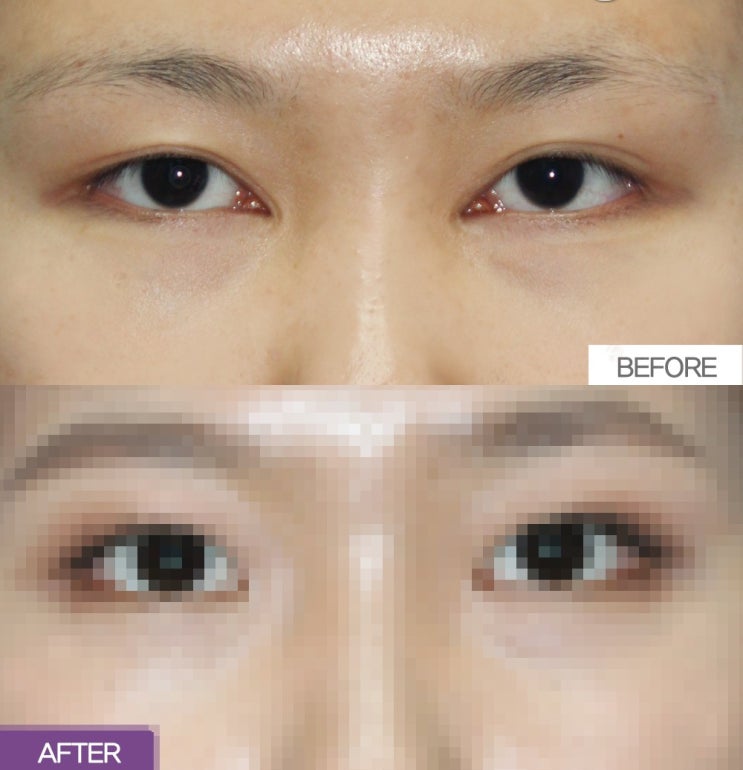
Can epicanthoplasty scars be improved with careful treatment? Let’s improve them together at Hyundai Aesthetic Surgery!
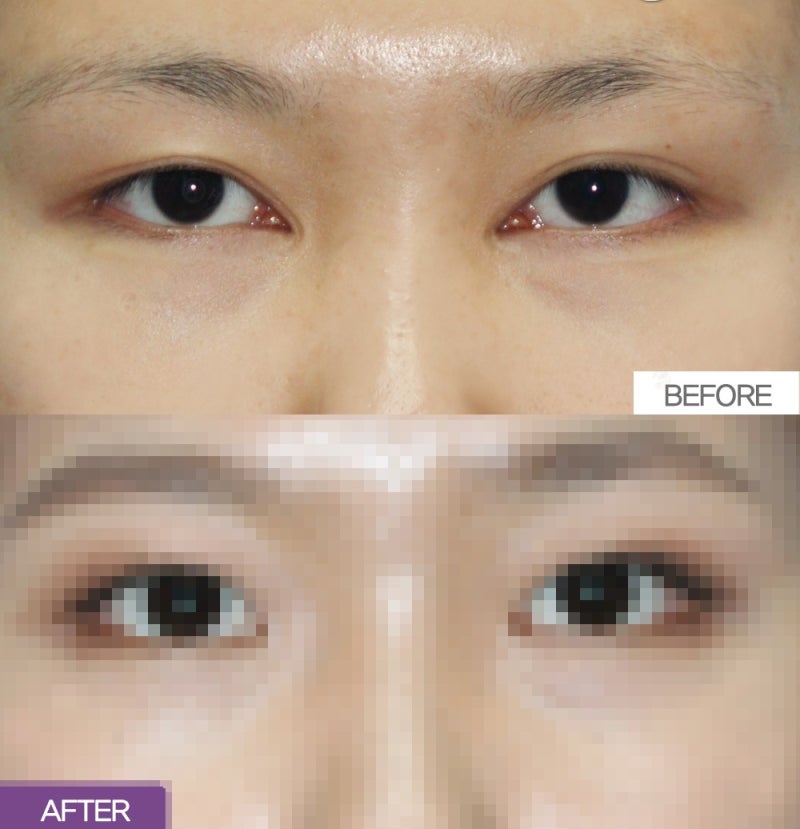
My eyes are set far apart, so I wish the distance between them were a little closer… I wish the inner corners of my eyes were beautifully opened like those of a famous idol… Because of my Mongolian folds, the front part of my eyes slopes downward into a pointed shape, making my impression look sharp…
For various reasons, regarding the inner corners of the eyes,
there were many people who had concerns.
At one time, there was a makeup trend called inner-corner eye makeup,
where a slight accent was added to the front part of the eyes with eyeliner.
That style of makeup was once popular.
However, with this kind of makeup,
it was difficult to say that a lasting improvement
of the complex had been achieved.
Makeup wears off quickly, and if the inner corners of the eyes
are continuously irritated by cosmetics such as liner or shadow,
it can strain the eyeballs,
and side effects such as decreased vision or dry eyes may occur.
That is why some people with these complexes
have chosen a surgical approach.
However, if surgery is chosen simply because the cost is low,
or after seeing many epicanthoplasty reviews online
and thinking only of dramatic results,
some people may end up feeling dissatisfied with the outcome.
What is epicanthoplasty scar tissue?
During epicanthoplasty improvement,
it refers to scars that occur during the process of incising and healing the skin.
Depending on each person’s skin condition
or the width of the sutured area,
blood and lymph circulation in that area
may not function properly,
causing fibrosis to progress and the tissue to become firm.
This is what it refers to.
In some cases, scars may also develop
depending on a lowered physical condition after surgery.
(Symptoms such as swelling of the scar at the sutured area,
turning white, or becoming red
may also be accompanied.)
Among the most commonly occurring problems,
three could be observed.
▼ First, when the opening is excessive. ▼
A white scar under the eye, or an indentation like a fingernail mark.
When red tissue inside the eye appears exposed.
When the lacrimal caruncle is excessively visible or appears too exposed.
▼ Second, when a protruding scar has formed at the inner corner of the eye. ▼
When you are not satisfied with the shape.
▼ Lastly, when a remaining scar has changed the overall impression. ▼
When the eyes appear too close together, or
when you are worried that scars may give a negative impression.
Due to a hasty decision made at one point,
those who are now concerned about these side effects of epicanthoplasty
were advised to read the upcoming posts carefully.
When a scar remains at the inner corner of the eye,
some people wonder what they should do.
by “EYE MASTER” Director Hwang Ho
the “4RE Canthoplasty Restoration Improvement Method”
was presented as a solution.
Q. What is Hyundai Aesthetic Surgery’s 4RE Canthoplasty Restoration Improvement Method?
1 RE SET “As if it were the first time”
2 RE POSITION “Find the proper position and adjust it”
3 RE MODEL “Reconstruct for a natural look”
4 RE MOVER “Strive to erase the traces of failure”
Canthoplasty restoration is performed after epicanthoplasty
to address the various problems
that may occur and improve them through restoration.
In addition, by analyzing various side effects
and the causes of problems,
we helped improve the eyes into an ideal shape
that suits each individual.
Q. Then, what is the direction of the restoration procedure?
A. At Hyundai Aesthetic Surgery, we avoid designs that place excessive strain on the eyes by focusing only on dramatic results.
Within a range that does not strain the eyes, we consider muscle tissue, left-right symmetry balance, size proportions, and the degree of damage to the inner eye ligaments to create a one-on-one customized eye shape suited to each patient.
“EYELID MASTER” Director Hwang Ho explained that the surgery is performed with internal suturing so the scar can be concealed.
Although scarring at the suture site is unavoidable during epicanthoplasty restoration, how well it can be hidden toward the inside of the eye so that the scar is not exposed depends on the skill of the operating surgeon or board-certified plastic surgeon.
At our clinic, based largely on three cases,
we wanted to introduce
the surgical methods of “EYELID MASTER” Director Hwang Ho.
Through these methods, we aim to preserve
the patient’s original individuality and clean-looking eyes,
and improve them into a natural,
customized eye shape suited to each individual.
Various other methods were also considered,
depending on the surgeon’s diagnosis, the scar tissue
an injection treatment to make it smoother
could also be performed.
However, these approaches should be based on
a specialist’s professional diagnosis through visual examination, palpation, auscultation, and other assessments,
with an improvement plan designed one-on-one
to avoid repeated surgeries and achieve satisfying final improvement
that you can truly feel.
After the procedure for satisfying improvement,
to help prevent unexpected situations,
we provided guidance on the precautions you should follow.
01 Immediately after the improvement procedure, swelling, redness, blurred vision, and similar
symptoms may occur.
02 For several days immediately after the improvement procedure, swelling or
conditions such as conjunctival edema
may occur.
03 Because alcohol and smoking can cause inflammation,
it is best to avoid them for a certain period.
04 High-temperature saunas, intense exercise that causes sweating, and other activities
that irritate the treated area should also be avoided.
05 Wearing contact lenses and applying eye makeup should also
be avoided for the period you were instructed.
06 If prescribed medication or ointment has been provided,
take or apply it on schedule until completed,
and if treatment instructions have been given, visit the clinic
at the scheduled time, as this is one step toward
achieving a satisfying result.


https://youtu.be/KHAawCxelNk
https://youtu.be/X_DTg9rfoNs