Before and After Upturned Nose Surgery: A Case of Lowering the Columella
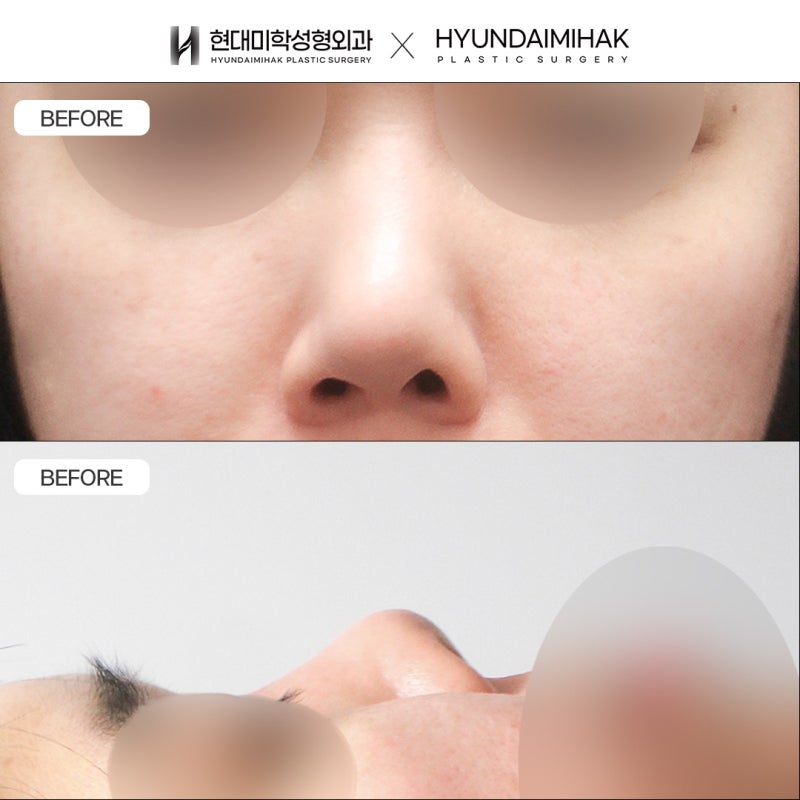
Hello, this is Hyundai Aesthetic Surgery. Many people decide to undergo rhinoplasty to make the central area of the face look more beautiful. Although it is a surgery chosen for aesthetic improvement, even a slight difference can make the nasal tip appear lifted, or the nose may look shortened, leading more people to search for revision surgery and before-and-after photos of upturned nose surgery. In the case above, an incorrect previous surgery caused the columella to appear retracted and created a need for nostril correction. This case improved through various revision rhinoplasty procedures such as columella lowering, nostril lowering, and upturned nose surgery, so we hope it will be helpful as a reference.
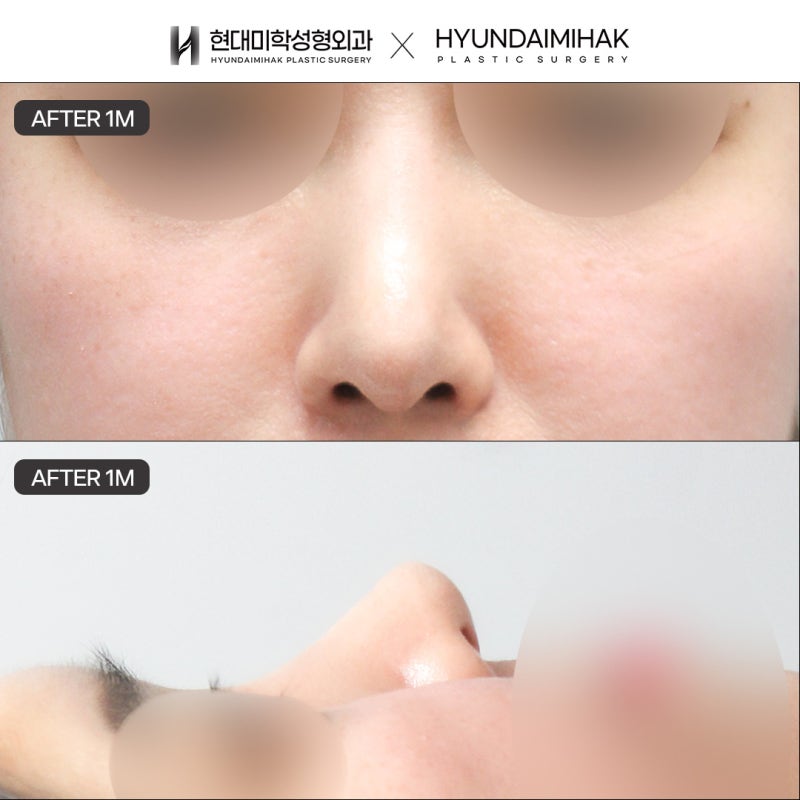
In general, when people think of an upturned nose, many only think of a raised nasal tip with visible nostrils. However, as you can see from the before-and-after results of upturned nose surgery above, cases of acquired upturned nose caused by rhinoplasty often involve more issues than expected, such as problems with the columella, nostrils, alar rims, and asymmetry. Depending on whether the columella is high or low, the overall impression of the face can look quite different. When viewed from the front, if it descends beyond a certain point, it can make the midface look long and give the impression of a long nose. Conversely, if the columella is raised too much or appears retracted, the upturned nose impression is difficult to avoid, and if the nostrils are also wide, the nose may appear wider horizontally.
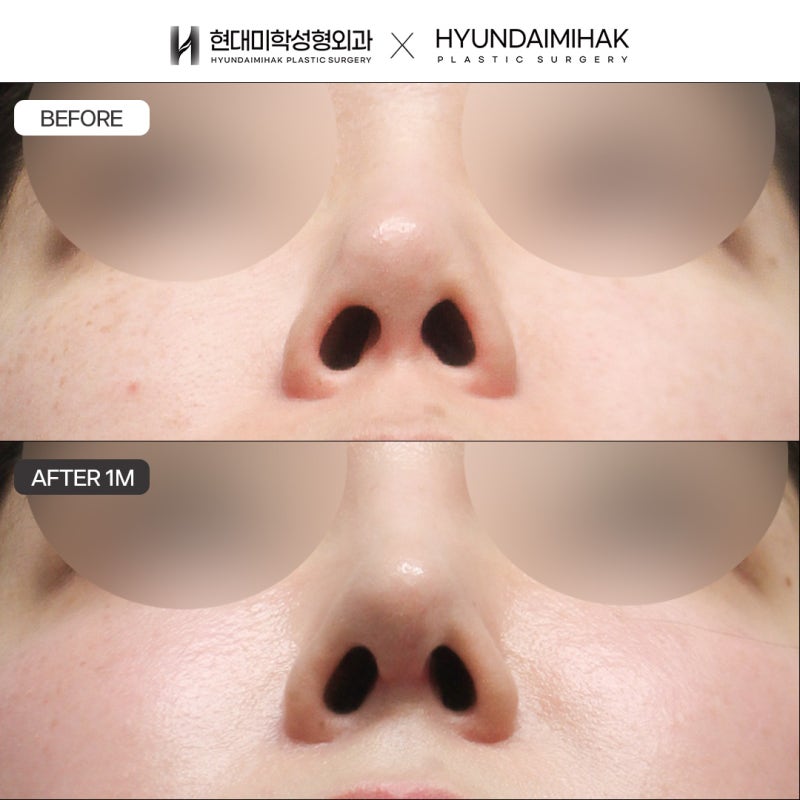
As such, when the columella, the pillar of the nose, is retracted or elevated, a natural before-and-after improvement in an upturned nose can be expected through columella lowering surgery. If you look at the preoperative photo of the case above, the upturned nose and drooping alae are quite noticeable. Although perfect correction is difficult, lowering the columella makes the drooping alae and upturned nose appear naturally improved. In addition, nostril lowering was performed to correct the shape of both nostrils, and revision rhinoplasty was used to correct the upturned nose and deviated nasal bridge.
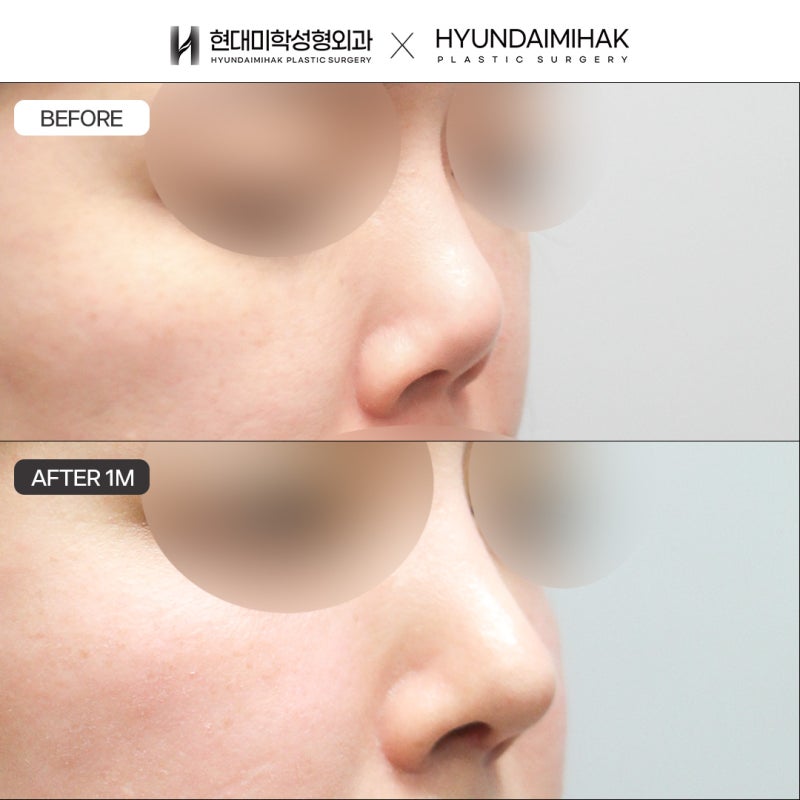
Looking at before-and-after photos of upturned nose surgery, you can see that surgery for a short nose or upturned nose is quite challenging. Even after surgery, the improvement may not be very significant, so it is most important to find a specialist with extensive clinical experience in rhinoplasty and revision rhinoplasty. In revision cases, the surgeon must also be able to closely assess the skin condition and anatomical structure of the nose, and because the nose must be designed while considering each individual’s facial proportions, it is often considered a surgery with a high level of difficulty.
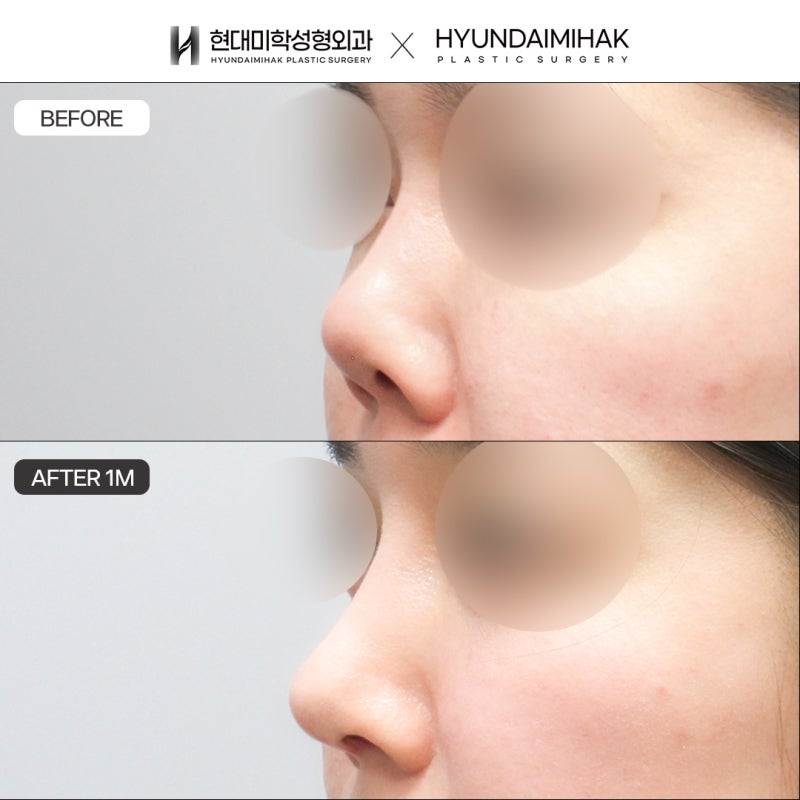
If the nose appears short after rhinoplasty due to a design that did not adequately consider the face, or if the nose has shortened due to postoperative contracture, it is important to expect natural improvement, as shown in before-and-after cases of upturned nose surgery, rather than perfect correction, and to restore the nasal line and proportions to a normal balance. In addition, revision surgery cases may recur again after some time has passed following surgery, so it is essential to go through a careful consultation process and proceed with a systematic surgical plan.
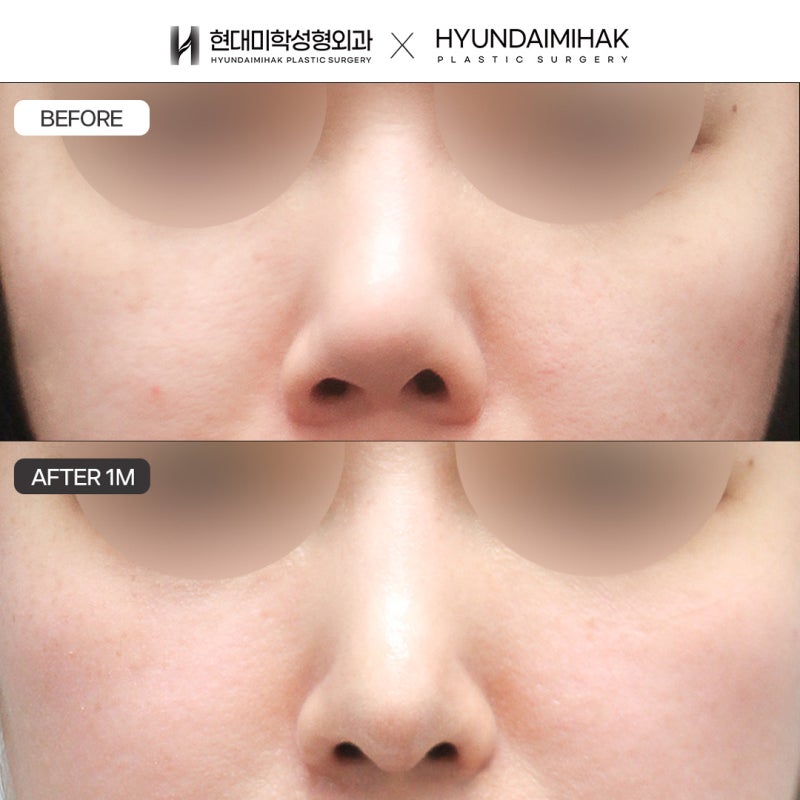
If you are looking into revision surgery while searching for reviews and before-and-after photos of upturned nose surgery, it is important to choose a clinic based on those results, but we also hope you select the surgical method that is appropriate when undergoing revision surgery. Approaching revision surgery with restraint rather than excessive expectations will be very helpful. If you have any questions about upturned nose surgery after reading today’s post, please feel free to visit our clinic at any time, and we will provide a detailed consultation. Thank you.