Upturned Nose Surgery Cost: The Side Profile Should Be Improved Too Hyundai Aesthetic Surgery
Hello, this is Hyundai Aesthetic Surgery. Many people may have heard that an upturned nose, which makes the nose look short and exposes the nostrils when viewed from the front, can also be considered unfavorable from a physiognomic perspective. This type of upturned nose not only makes the nose itself appear shorter, but the shortened nasal length can also make the midface look shorter. For those looking into upturned nose surgery costs and cases in order to improve this concern, we have chosen this topic to provide helpful information.
During upturned nose surgery, depending on the diagnosis, procedures such as nasal tip surgery, nasolabial angle correction, alar rim lowering, and nasal lengthening may be added to improve the lifted nasal tip. If the nasal bridge is also improved at the same time, the estimated cost may vary. The average cost of upturned nose surgery is generally set across a wide range, from 1 million KRW to 5 million KRW. For an accurate estimate, visiting the clinic for a consultation will allow you to learn more specific surgical items and the upturned nose surgery cost. As such, there are various surgical options to improve an upturned nose with visible nostril exposure, and the cost of upturned nose surgery can also vary.
What is more important than the cost of upturned nose surgery is understanding the current condition of your nose, its anatomical structure, the appropriate surgical procedures, and whether the hospital has a safe postoperative care system. This is because even if the cost of upturned nose surgery is relatively low or high, the outcome can differ depending on the skill of the specialist medical team performing the surgery. Therefore, it is advisable to check the medical team’s experience, whether they have upturned nose surgery cases, and whether they have broad experience including revision surgery for upturned noses.
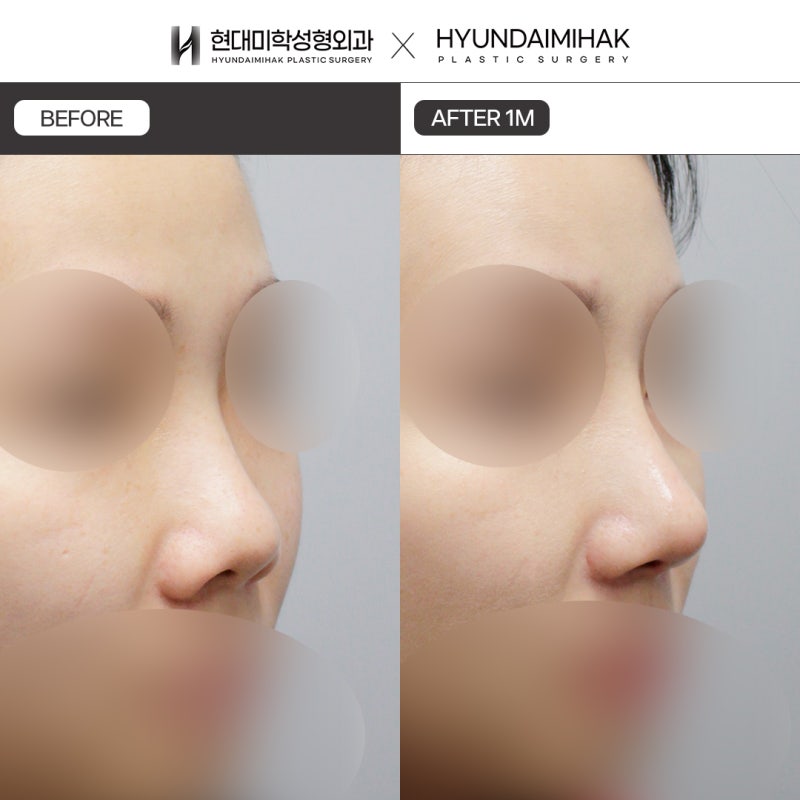
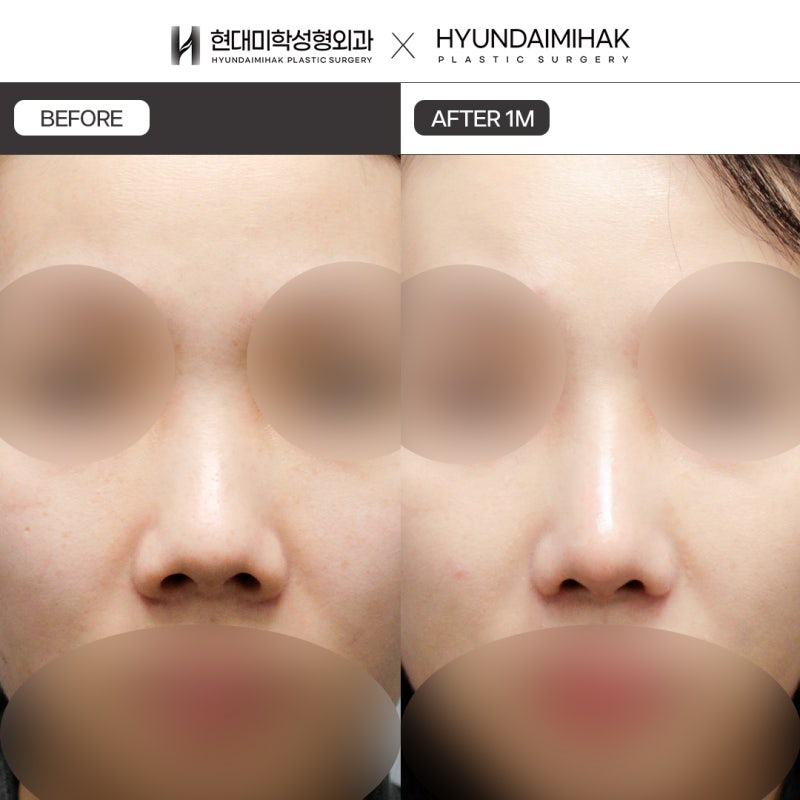
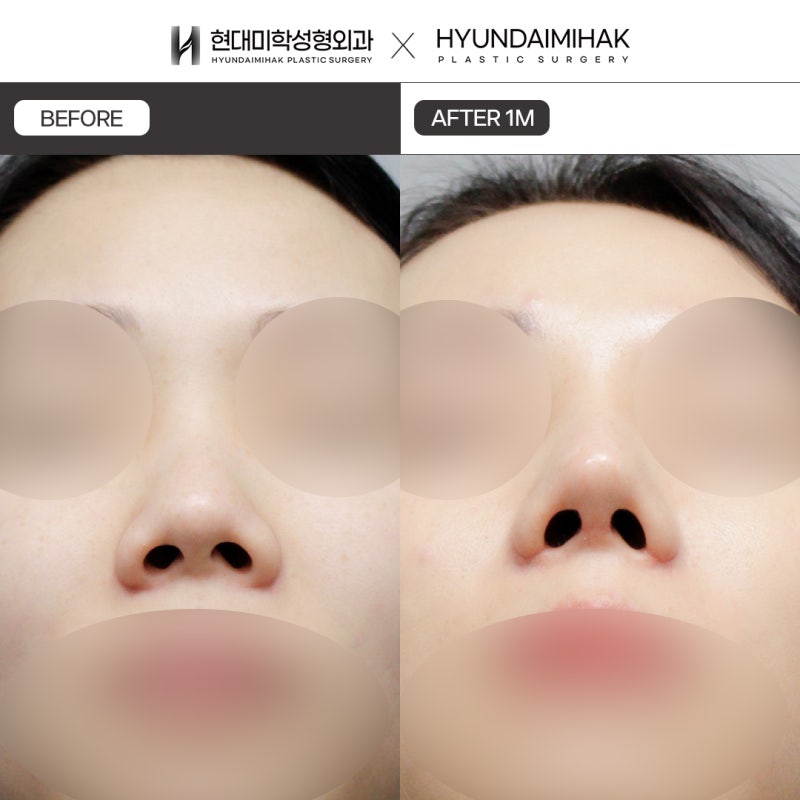
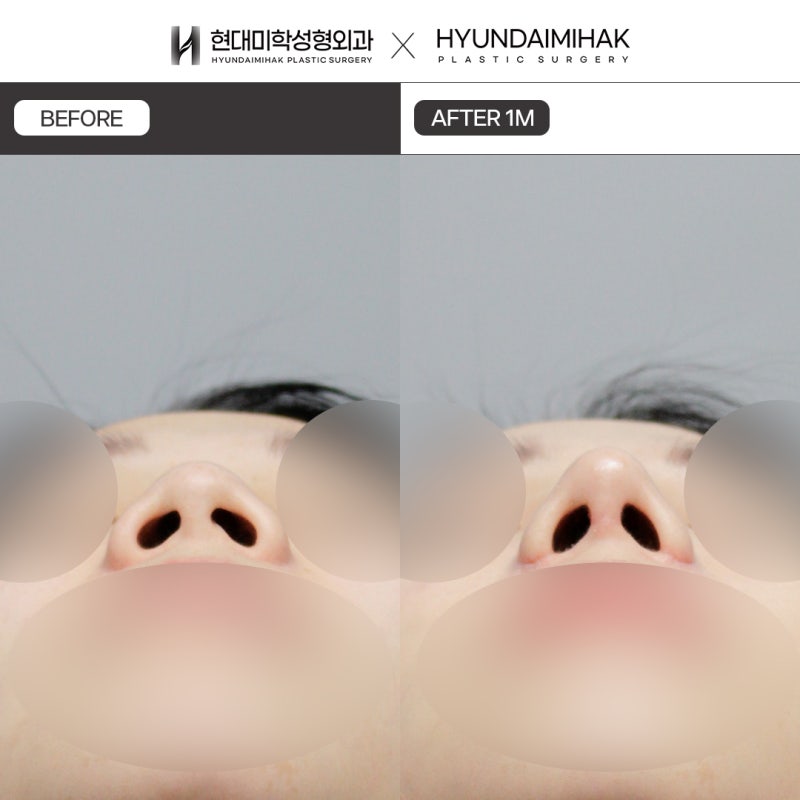
In the upturned nose correction case above, silicone was used for the nasal bridge, and ear cartilage and septal cartilage were used for the nasal tip. Nasal tip elevation, alar reduction, and upturned nose surgery were performed together. Before surgery, the nostrils and alae appeared to droop downward compared with the nasal tip. After upturned nose correction surgery, the nostrils and alae were positioned more ideally than before, and the degree of nostril exposure was also naturally reduced. From the side view, the previously lifted angle and height of the nasal tip were corrected.
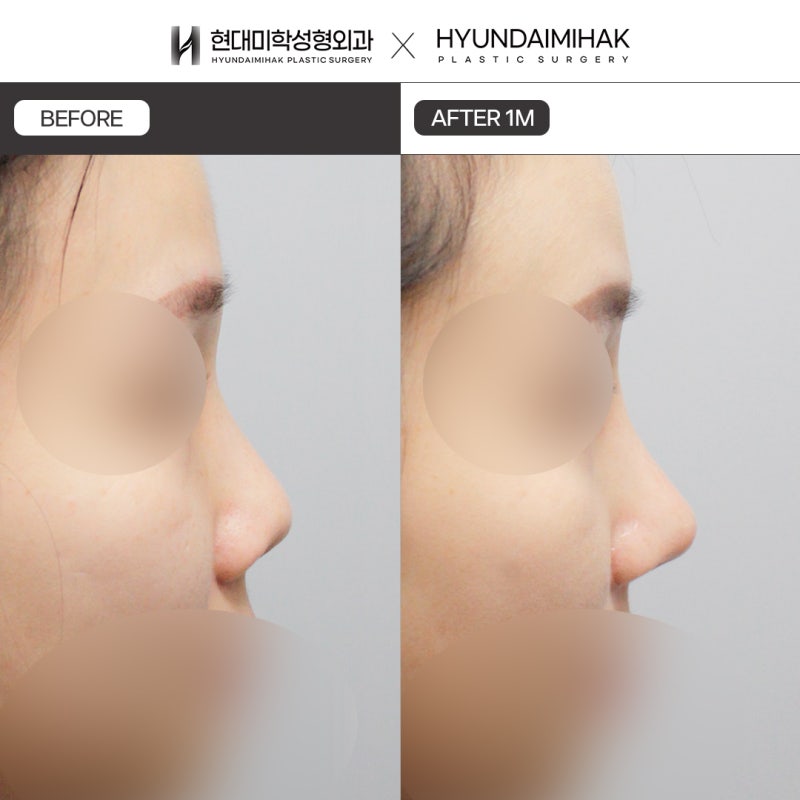
Because an upturned nose may require improvement not only in nasal length or the degree of upward rotation, but also in various issues such as alar reduction, it is best to receive diagnoses from several clinics rather than just one, compare upturned nose surgery costs and diagnoses, and make a careful decision. In addition, not only congenital upturned noses with small and weak nasal structures, but also acquired cases caused by tissue contraction or contracture after rhinoplasty can be corrected through revision surgery, so we recommend receiving a consultation.
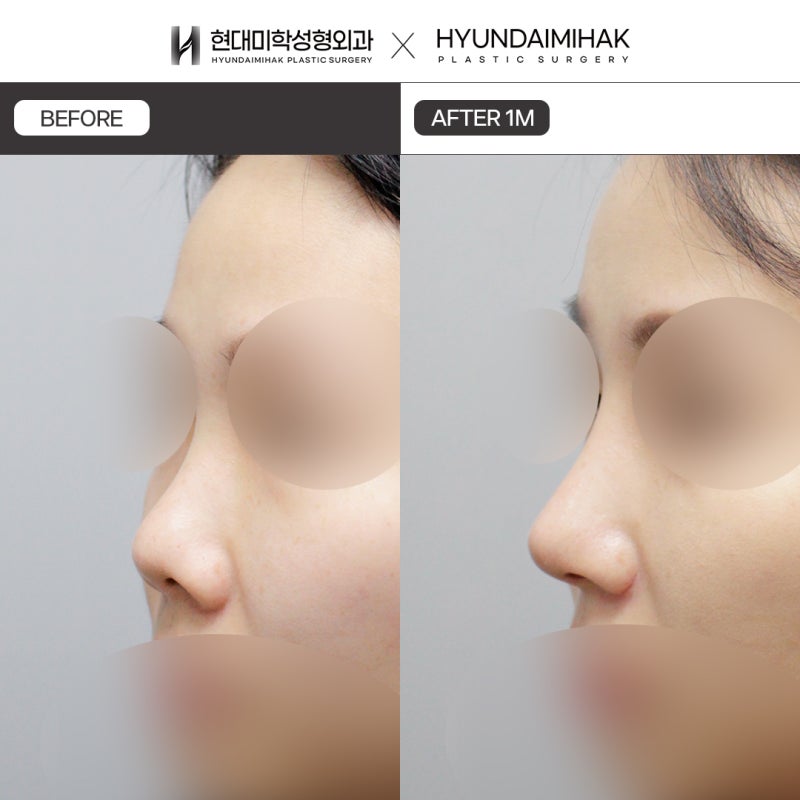
Upturned nose surgery should not only improve nostril exposure visible from the front; true upturned nose correction also requires improvement of the nasolabial angle that appears lifted from the side. If the nose looks short and upturned, surgery should ideally correct the nasolabial angle and firmly reinforce the cartilage support so that the nasal tip does not droop or fall later on. We hope you choose a clinic that can also improve the nasal tip shape harmoniously in proportion to your facial balance. Thank you.