



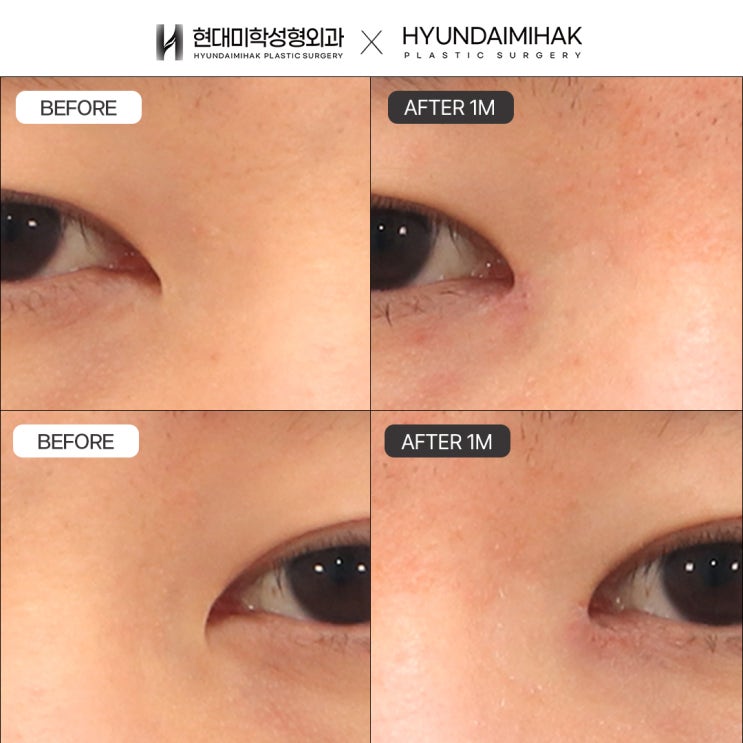
How to Improve Complexes with Epicanthoplasty Scar Removal and Its Effects
Hello, this is Hyundai Aesthetic Surgery. Recently, the number of people undergoing cosmetic plastic surgery has been increasing regardless of age or gender. In the past, mainly young women chose plastic surgery to improve personal complexes, but now even middle-aged men are joining this group, and the demand base is becoming increasingly diverse.
Among these procedures, eye surgery, with which a change can be expected even from relatively simple procedures, is one of the surgeries many people consider and choose. Representative eye surgery procedures include double eyelid surgery and epicanthoplasty, and these surgeries are highly popular because they can change the impression of the face. However, plastic surgery always has two sides, and in particular, it may sometimes require additional surgery such as epicanthoplasty scar removal, which is one issue that should not be overlooked.
Among the scars that may occur after eye surgery, epicanthoplasty scars require particular attention. Scars may form during the process of making incisions in the skin, and over time, these scars may change from red marks into pale, depressed scars. In those with keloid-prone skin, they may develop into scars that grow beyond the damaged area. Because such scars can go beyond a simple cosmetic concern and lead to secondary issues such as psychological stress, social withdrawal, or depression, appropriate early management is important.
There are various methods used in clinics for epicanthoplasty scar removal, but recently laser treatment has been widely used. Laser treatment is applied in a customized manner depending on the condition of the scar, and it can especially help early scars between 3 and 9 weeks after surgery by reducing redness and decreasing scar size. Treatment during this period tends to carry a relatively low burden of side effects such as swelling, bruising, or scabbing, making it preferred by many patients. On the other hand, older scars or keloid scars may require a procedure that restructures fibrous tissue in the dermal layer using a laser designed to reduce pain, such as a pinhole laser. This method can help improve the scar area as well as problems such as adhesions and nodules.
For epicanthoplasty scar removal, the treatment method may vary depending on the individual’s skin condition and the shape and depth of the scar. The procedure must be performed by appropriately adjusting the laser energy and wavelength, and because sufficient improvement is difficult to expect from a single treatment, consistent care and repeated sessions may be necessary. In particular, if melasma or blemishes are also present, a more delicate approach is required. It is important to remember that early treatment is most crucial, as scars may become more firmly established if the proper treatment timing is missed.
Patients considering epicanthoplasty scar removal should be sure to receive an accurate diagnosis through consultation with a dermatologist or plastic surgery specialist. Since scars may respond differently to treatment depending on each person’s skin characteristics, it is necessary to establish a customized plan for each patient. Based on experience with various scar treatments, Hyundai Aesthetic Surgery proposes a treatment method suited to each individual patient and performs procedures using laser equipment. If you have any questions about epicanthoplasty scar removal, please feel free to visit Hyundai Aesthetic Surgery at any time. We will empathize with each patient’s concerns and do our utmost to help. Thank you.