



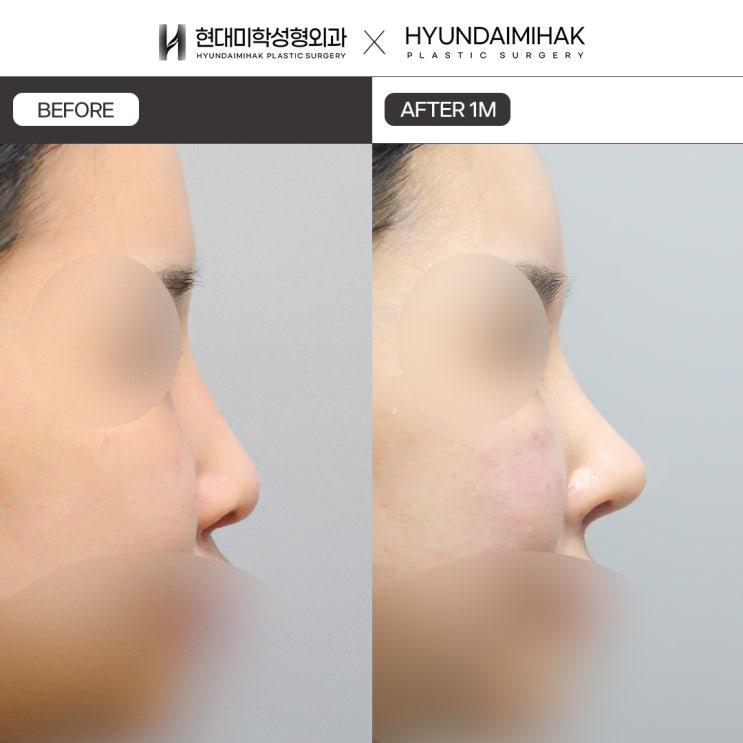
Understanding the Advantages and Features of Autologous Rib Cartilage Rhinoplasty
Hello, this is Hyundai Aesthetic Surgery. As interest in cosmetic surgery has recently increased, many people are considering various procedures to achieve external changes as well as greater confidence. Among them, autologous rib cartilage rhinoplasty is a method often chosen by those who wish to improve the shape of their nose. The nose is the central feature of the face, and because its shape greatly influences the overall impression, rhinoplasty can be considered an important process that goes beyond simple cosmetic improvement to help balance the face. In particular, for those with a low nasal bridge or a drooping nasal tip, autologous rib cartilage rhinoplasty can offer a more three-dimensional and natural-looking improvement.
Unlike conventional surgical methods that use silicone, autologous rib cartilage rhinoplasty uses cartilage harvested from the patient’s own body. The most commonly used autologous cartilage is cartilage taken from the rib, and its size and firmness provide the advantage of allowing stable correction of the nasal tip. Because autologous cartilage can provide a natural and long-lasting effect after surgery, it is preferred by many patients. When silicone is used, deformation or instability of the shape may occur over time, whereas autologous cartilage has a low risk of rejection by the body and provides stable results. In addition, autologous rib cartilage rhinoplasty aims for a natural nasal line, which helps reduce the chance of the nasal tip looking unnatural or sharply protruding.
An important point when performing surgery is that not only external changes but also the functional aspects of the nose must be considered. Autologous rib cartilage rhinoplasty does more than correct the shape of the nasal tip; it also improves the internal structure and function of the nose, so accurate diagnosis and systematic examinations are necessary before surgery. For example, it is important to precisely assess the nasal structure through 3D-CT imaging or endoscopic examination and establish a surgical plan. If septal cartilage or ear cartilage cannot be used, autologous rib cartilage may be a more suitable option.
In addition, systematic postoperative care is necessary after autologous rib cartilage rhinoplasty. In the early stage after surgery, swelling or pain may occur, and proper care is essential to minimize these symptoms and support faster recovery. At this time, attentive care from experienced medical staff and regular progress checks are important. Recently, many hospitals offer a one-year postoperative warranty system or aftercare services, allowing patients to prepare for problems that may arise after surgery. Through this, patients can get help in dealing with unsatisfactory results or unexpected issues after surgery.
Autologous rib cartilage rhinoplasty is a surgery that considers the balance of the entire face along with the shape of the nose. For that reason, it requires thorough preparation before surgery and the expertise of experienced medical professionals. It is important to choose the surgical method that suits you through sufficient consultation before surgery and continue to monitor your progress after surgery.
Hyundai Aesthetic Surgery has long-experienced medical professionals and equipment in place, providing treatment tailored to each patient. If you have any questions about autologous rib cartilage rhinoplasty, you can receive detailed information through consultation at any time. If you want a natural and beautiful nasal line, apply for a consultation through the KakaoTalk channel below. Thank you.


