



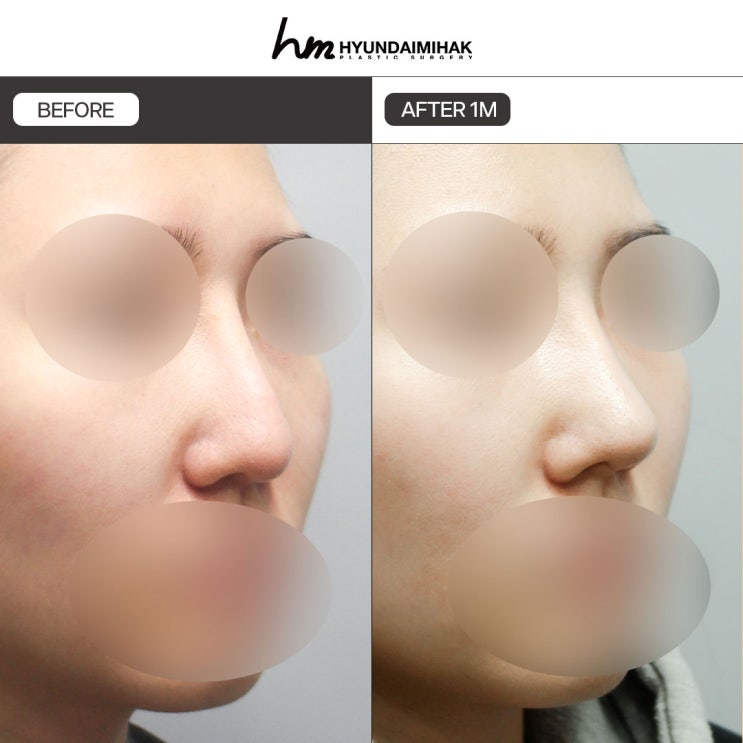
Nasolabial Angle Surgery: A Look at Angle Standards and Design

Hello, this is Hyundai Aesthetic Surgery. The nose is located at the center of the face and has a significant impact on the overall impression. Not only the height of the nasal bridge, but also the direction of the nasal tip, the shape of the nasal dorsum, and even the distance between the nose and lips influence the three-dimensional appearance and harmony of the face. In particular, if the nasal tip appears droopy or the nostrils are excessively visible, the impression may look heavy or somewhat overwhelming. Many people think that simply raising the nasal bridge can improve their image, but in reality, balanced improvement of the entire face requires considering the ‘nasolabial angle,’ the angle formed between the nose and the mouth.

The nasolabial angle is the angle formed between the nasal tip and the upper lip. The ideal angle is generally known to be 95–105 degrees for women and 90–95 degrees for men. If this angle is too small, the nasal tip can look droopy and the philtrum may appear short; conversely, if it is too large, the nose can look upturned and the impression may appear strong. In some cases that look like protruding mouth, the issue may actually be related to the nasolabial angle, so improvement can sometimes be expected through nasolabial angle surgery rather than correcting only the mouth. For this reason, many people considering rhinoplasty need a design that takes into account not only the nasal bridge, nasal tip, and alar width, but also this angle.

Nasolabial angle surgery is a procedure that brings out facial dimension and harmony by adjusting the position and direction of the nasal tip. When the nasal tip is too low and the angle is narrow, techniques such as septal extension grafting may be used to gently lift the nasal tip. Conversely, when the angle is too wide and the nose looks upturned, surgery is performed by reducing the angle through cartilage repositioning or partial removal. In particular, if the mouth appears protruded or the side profile looks heavy, improvement toward a more refined image can be expected through nasolabial angle surgery, with the aim of a soft and natural impression even when smiling or speaking.

The frontal impression is important, but today, the three-dimensional balance of the side profile is also considered a key factor in surgical satisfaction. Nasolabial angle surgery is a highly effective way to enhance this dimensionality. Many people worry that the philtrum may look longer, but with moderate angle adjustment, the mouth can visually appear more recessed, which can actually improve overall facial balance. For women, slight visibility of the nostrils is often viewed as natural, and lowering the nasal tip excessively to achieve this can instead make the nose look longer. Therefore, moderation is the key in nasolabial angle adjustment.

At Hyundai Aesthetic Surgery, we carefully analyze each patient’s nasal bone height, cartilage structure, skin thickness, fat layer, and other factors through 3D CT and precise examinations before surgery. Based on this, the nasal line and nasolabial angle are designed with harmony with the nasal bridge, nasal tip, and alar base in mind. Experienced medical staff perform the surgery, and a detailed consultation is used to establish a plan suited to the patient’s face shape and proportions. Nasolabial angle surgery, which considers not only height but also facial dimension and impression, can be a good choice for achieving external changes as well as inner confidence.

Ultimately, nasolabial angle surgery involves a small change in angle, but its impact on the overall facial image can be significant. In particular, those who want a harmonious impression from both the front and side views should carefully consider many factors when undergoing rhinoplasty. Based on extensive clinical experience, Hyundai Aesthetic Surgery pursues three-dimensional beauty and creates the most natural changes for a refined impression. If you want a natural and harmonious change, we recommend consulting with a specialist now to design a nasolabial angle plan that suits you.


