



Must-read before consulting an under-eye bag clinic: how to reduce side effects
Hello, this is Hyundai Aesthetic Surgery. Have you ever looked in the mirror and felt that the area under your eyes looked shadowed and tired? Many people think of this as “dark circles,” but in many cases, the actual cause is bulging under-eye fat. This is commonly referred to in Korean as “under-eye bags.”
Under-eye bags are not caused by aging alone. They can appear even in your 20s, and may be related to genetic factors, sleep habits, or changes in the position of fat. What matters at this point is distinguishing whether it is simple dark circles or a problem caused by protruding fat. Because the treatment method differs completely depending on this distinction, you should receive a precise diagnosis at an under-eye bag clinic. These days, more and more people are turning to under-eye fat repositioning, which corrects the position of the fat, to soften their facial impression.
Under-eye fat repositioning vs lower blepharoplasty: which is better?

Under-eye fat repositioning and lower blepharoplasty are both procedures designed to improve puffiness or sagging under the eyes, but their approaches and purposes are different. Simply put, under-eye fat repositioning is surgery that corrects the position of the fat, while lower blepharoplasty corrects the skin and muscle as well.
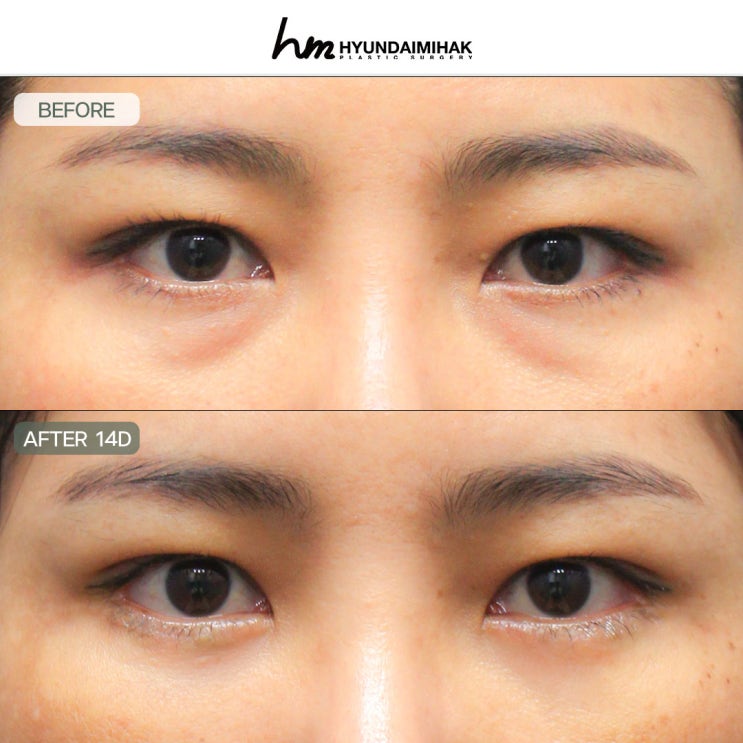
Under-eye fat repositioning is suitable for younger patients, especially those in their 20s to 40s. This is because skin elasticity still remains at these ages, and the issue is often simply protruding fat. By repositioning the under-eye fat, the aim is to correct unevenness and fill hollow areas for a softer facial impression. For this reason, improvement can still be expected with a non-incisional approach that offers relatively fast recovery and leaves no incision line on the outer skin.
On the other hand, lower blepharoplasty is more suitable for patients in their 40s to 60s and older. In these cases, not only fat but also sagging of the skin and muscles tends to progress together. By excising the skin to tighten loosened areas and repositioning the muscle and fat at the same time, an anti-aging effect can be expected.
In other words, if skin elasticity remains and dark circles are the main concern, under-eye fat repositioning is often the right fit; if skin sagging is severe and wrinkles are deep, lower blepharoplasty often is.
How is the surgery performed?

Under-eye fat repositioning surgery is performed through the conjunctiva, the inner side of the eye, so no incision line is left on the outer skin and recovery also tends to be relatively fast. It is preferred by younger patients in their 20s and 30s. The surgery takes about 40 minutes to 1 hour and is performed after anesthesia. Pain during surgery tends to be relatively mild, and for the first day or two afterward, cold compresses are needed to help reduce swelling.
What is the recovery process like, and how much pain is there?

Bruising and swelling after surgery vary from person to person, but they usually subside significantly within 3 to 4 days. Many people can return to daily activities after about 5 days, and makeup can often be applied from 3 days after surgery.
At first, the area under the eyes may feel slightly tight or look uneven, but after about 1 week, the fat often settles into place and the area gradually becomes smoother, although this varies from person to person. Be sure to check whether the under-eye bag clinic has a well-organized aftercare program.
Side effects and failed cases: knowing them in advance helps
Under-eye fat repositioning is not considered extremely difficult, but it does require a delicate sense of precision. If the surgery is performed by medical staff with insufficient experience, the following side effects may sometimes occur.

- Too much fat is removed, so the area under the eyes looks hollow
- Asymmetry or an uneven, bumpy surface
- The fat slides down again or the bags return after repositioning
- Pigmentation or fine scars
To prevent these problems, you should choose a clinic where a specialist provides a direct diagnosis and has extensive clinical experience. When choosing an under-eye bag clinic, also check whether it has medical staff who focus on eye surgery.
How to choose a good under-eye bag clinic
Is the diagnosis accurate during the preoperative consultation? It is best to choose a clinic that does more than simply say, “You have a lot of fat,” and instead analyzes the cause and location of the fat protrusion as well as skin thickness.

- Does the head director or an experienced board-certified plastic surgeon personally handle the consultation and surgery?
It is a good idea to check whether the doctor who will actually perform the procedure consults with you in person. At consultation, Hyundai Aesthetic Surgery first reviews the condition of your eyes. - Is there an aftercare system?
A step-by-step program with cold compresses, regenerative laser and scar injections is important. At Hyundai Aesthetic Surgery, the postoperative care plan is explained during the consultation. - Can you review similar cases and a surgical plan during the consultation?
Use real patient photos as a reference, but confirm during the consultation whether the method suits your eyes. - Is the clinic easy to get to?
Moving around is uncomfortable after eye surgery, so a clinic that is easy to reach is an advantage. Hyundai Aesthetic Surgery is a 1-minute walk from Exit 1 of Sinsa Station.
In closing
Under-eye fat repositioning can help the overall face look softer and younger. However, the under-eye area has thin skin and many blood vessels, even compared with other parts of the face, so a delicate approach is required. Therefore, rather than choosing solely based on low prices or reviews, you should carefully review the doctor’s skill level and the aftercare system.
If you want a diagnosis tailored to the condition of your eyes, receive an accurate consultation at a trusted under-eye bag clinic. When surgery and care are done properly, even a small change can alter the overall impression of the face.