If You Want Natural Results with Implant-Free Nasal Tip Surgery
Hello. This is Hyundai Aesthetic Surgery. Many people are interested in primary rhinoplasty or are looking into clinics and surgical information due to concerns about the height of the nasal bridge or nasal tip, the shape of the nostrils and alar base, the degree of nostril show, or aesthetic and functional issues. Because rhinoplasty can be performed in a way that is tailored to each individual, from in-depth analysis of these concerns and selection of implants or materials for improving complexes to the surgical method and anesthesia method, the most accurate way to find answers to your concerns is to receive an in-person consultation.
Today, we have prepared this post for those who are looking into implant-free nasal tip surgery for natural-looking results. Before your consultation, let’s take a look at implant-free nasal tip surgery, which can be helpful and useful to know in advance. Since everyone’s nose shape and appearance are different, the surgical method and nasal design may vary depending on the type. First, if a low nose makes the face look less three-dimensional, rhinoplasty is performed after considering the overall balance and anatomical structure, such as facial proportions, midface conditions, and the distance between the brows. The nasal bridge height may be improved by inserting autologous material, or the nasal height may be adjusted by grafting autologous tissue to the nasal tip according to the preferred nasal tip design.
Next, for bulbous nose cases among those looking into implant-free nasal tip surgery, the size of the nasal tip and alar area can be improved by refining the shape of the cartilage or performing cartilage-suturing surgery. If the nasal tip looks thick due to excess fat, an appropriate amount may be removed to adjust skin thickness and improve the bulbous nose. In the case of a hump nose where the nasal dorsum does not look straight, improvement is possible through osteotomy, insertion of autologous materials into the nasal bridge and tip, and hump correction. In addition, if the nose falls into the category of a short upturned nose or a long nose that looks like an arrow nose, upturned nose correction and long nose correction can also improve various issues, as with the other cases above, by combining implant nasal tip surgery with implant-free nasal bridge surgery.
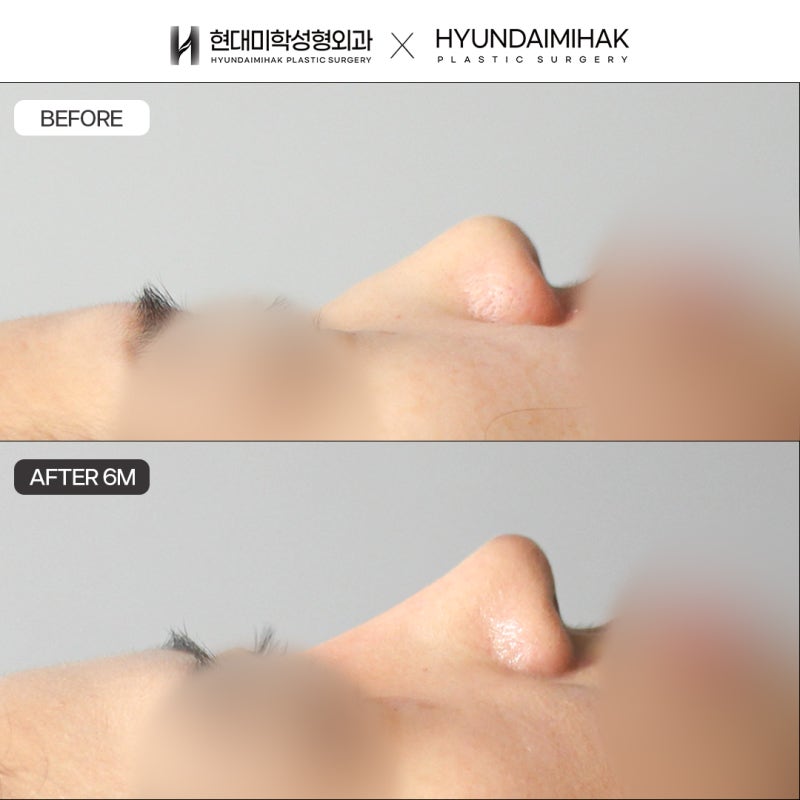
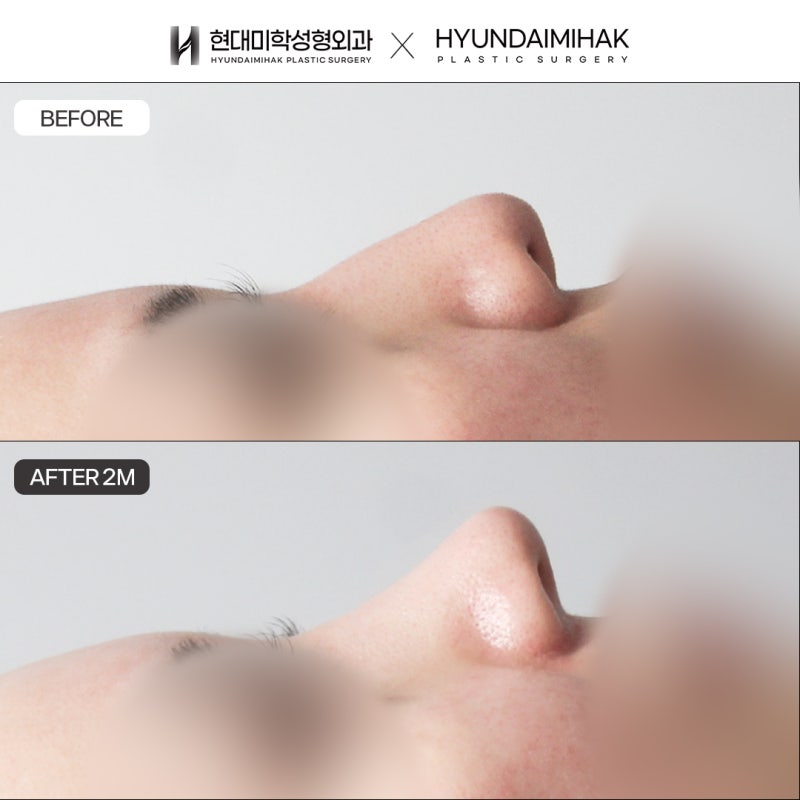
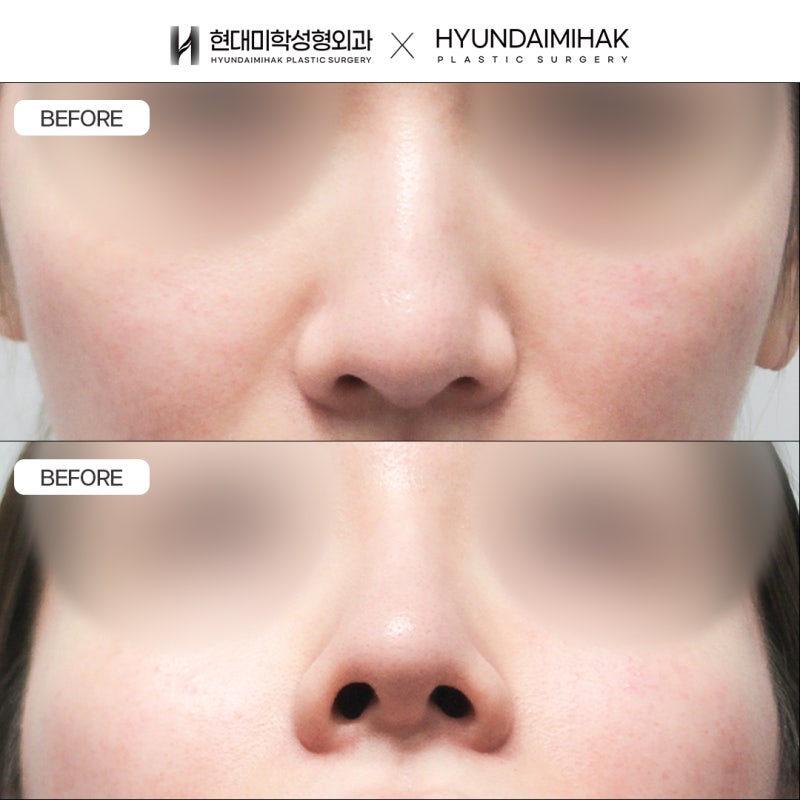
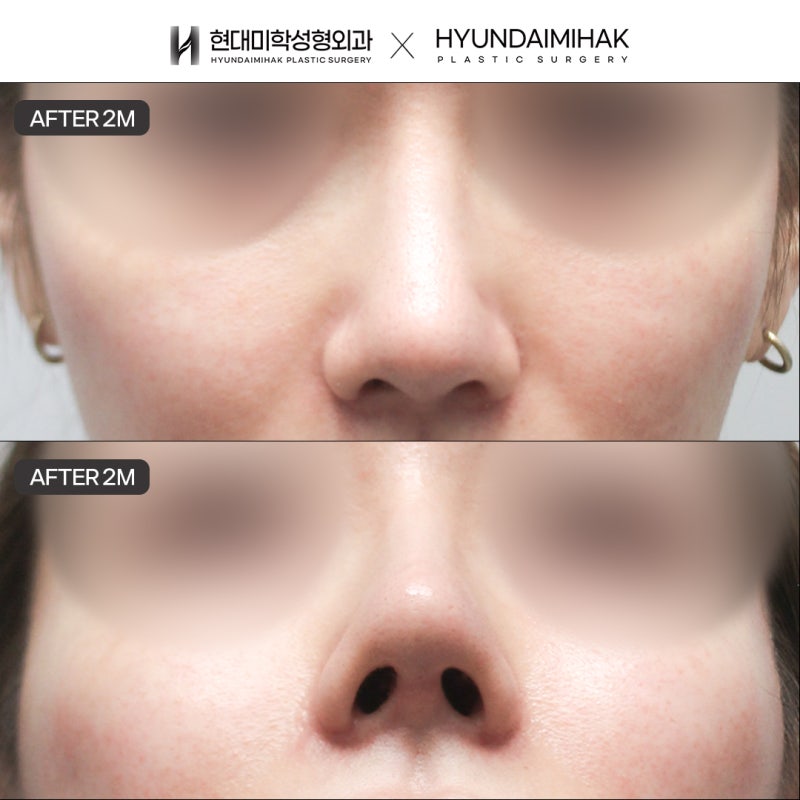
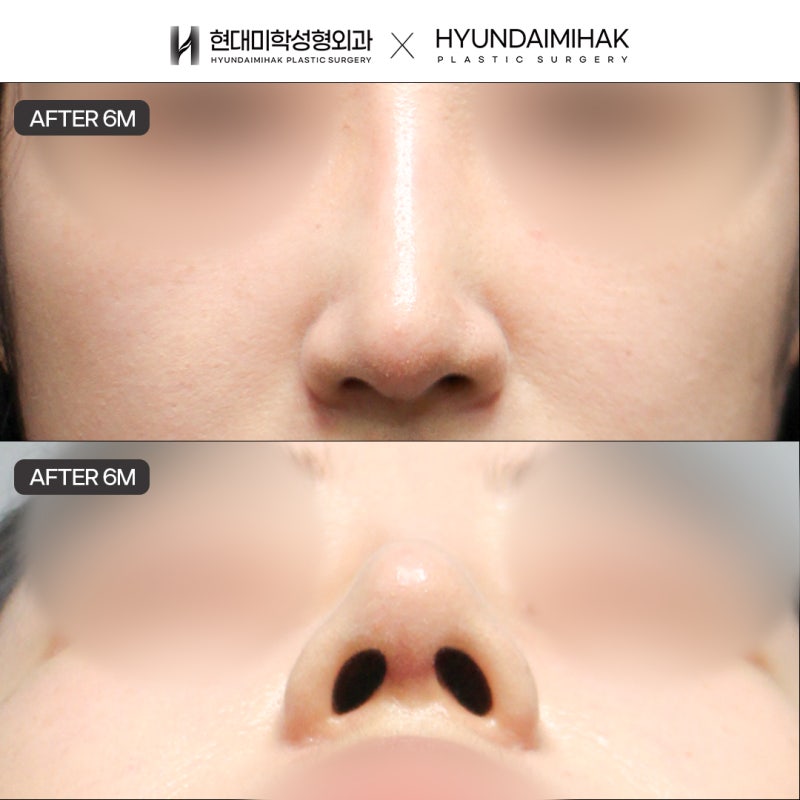
Also, depending on whether you prefer autologous tissue or implant-free materials, or prefer the use of implants, the materials inserted or grafted into the nose can be selected appropriately to improve the nasal shape. For more detailed information, you can consult with a dedicated medical team specializing in rhinoplasty, or visit our clinic and inquire in person for a systematic and detailed one-on-one consultation. The before-and-after photos above show a bulbous nose case in which the nasal tip was low and looked blunt, while the alar base appeared wide.
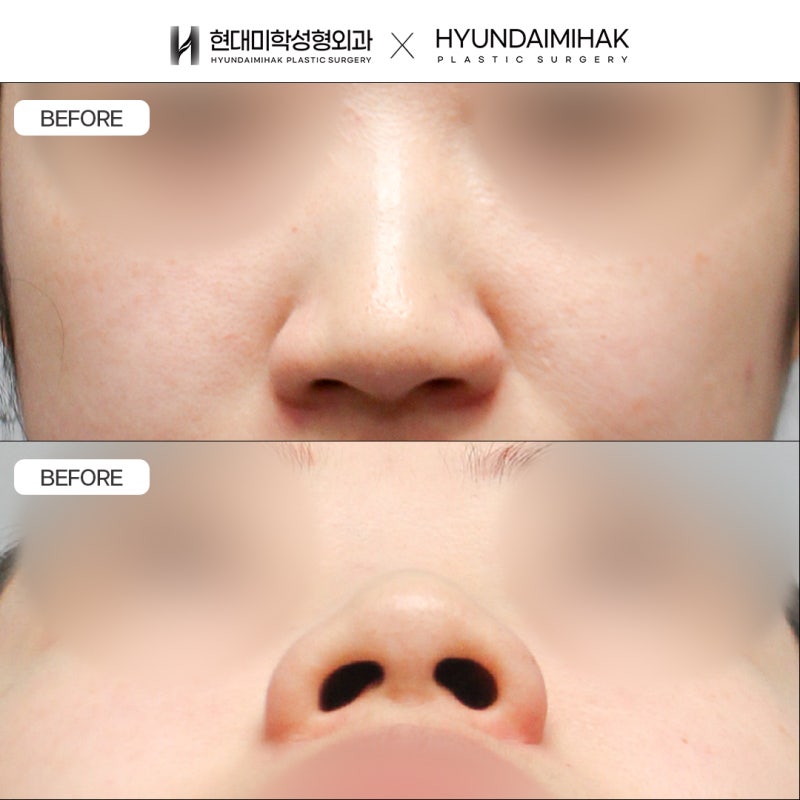
This case was improved through autologous material grafting to the nasal bridge and tip, bulbous nose correction, and alar reduction surgery, so if you have a similar nose shape, it may be helpful to refer to it. In this way, reviewing cases from various clinics, checking whether there are cases that improved a nose similar to yours, and gathering or referring to information through website before-and-after photos and reviews from actual patients can help you choose a good clinic. We recommend referring to a range of insights before making your decision.
Many people have different needs when it comes to rhinoplasty. If you are among those who specifically want only implant-free nasal tip surgery, rather than insisting on just one clinic, we hope you will experience consultations at several clinics, choose an appropriate surgical method, suitable implants or materials, and an experienced specialist medical team, and receive successful implant-free nasal tip surgery.