Before and after lowering the crease line: resolving excessive crease thickness
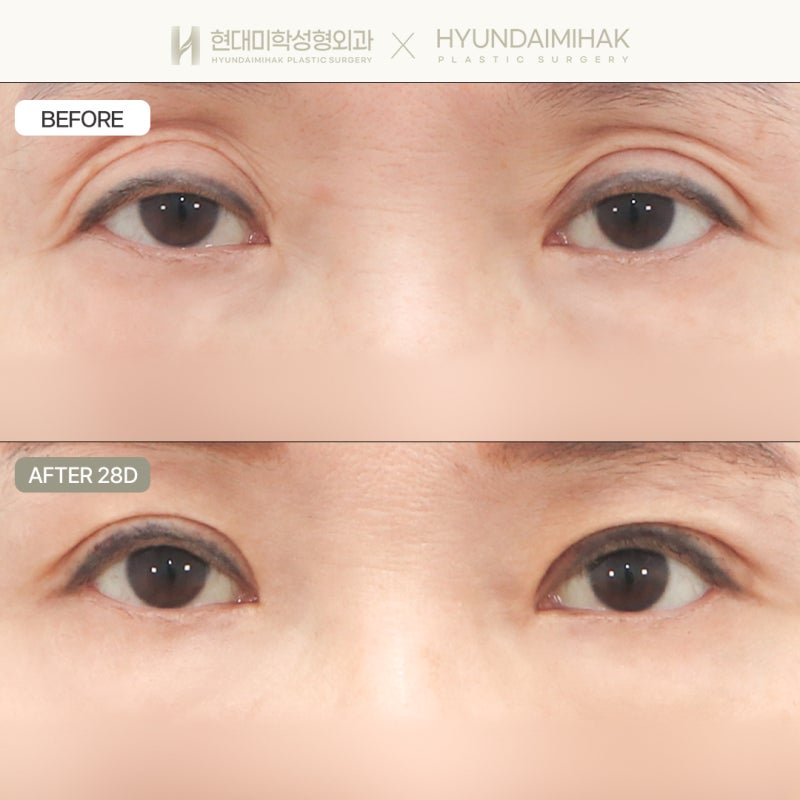
Hello, this is Hyundai Aesthetic Surgery. Many people may be looking into revision surgery or experiencing emotional distress after eyelid surgery they chose in hopes of achieving beautiful eyes did not turn out as expected. In fact, inquiries about revision eyelid surgery have been increasing more than before, so we are making every effort to listen closely to our patients. Among these inquiries, many patients look at before-and-after cases of lowering the crease line and ask about crease-lowering surgery to correct thick double eyelids. We receive a wide range of questions, such as whether it can be done with a buried-suture method, whether an incision method is needed, whether a double-line correction is necessary, or whether skin excision is required.
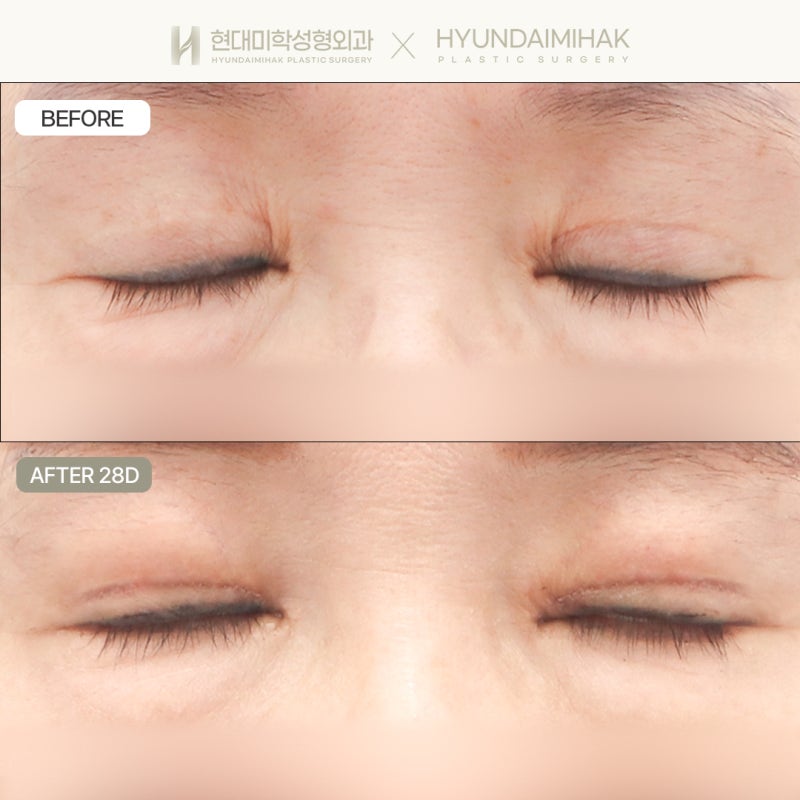
After double-eyelid surgery, many people refer to a thickened double-eyelid crease as “sausage eyes.” This term is known to describe eyes that look thick and artificial due to a crease that was created too high, and a double-eyelid line that appears puffy like a sausage because of deep fixation. Even after quite some time has passed since double-eyelid surgery, some people may still worry that they have sausage eyes because the swelling does not continue to subside. In such cases, an in-person consultation for a detailed diagnosis can be helpful, and as a first step, it is advisable to contact the clinic where the surgery was performed.
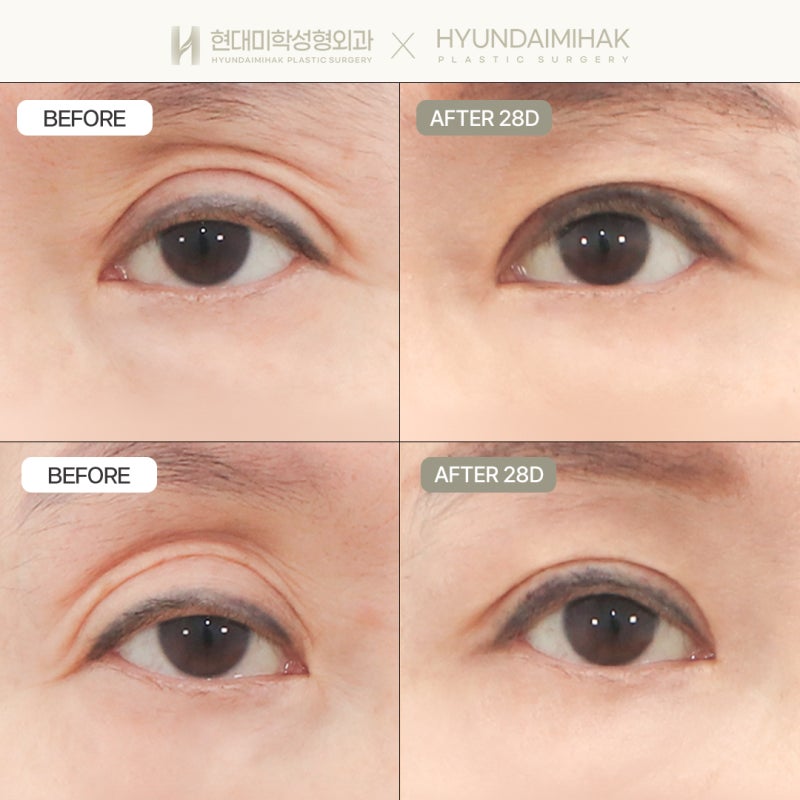
To get to the point, this type of sausage-eye appearance can be improved, as seen in before-and-after cases of lowering the crease line, through revision surgery that lowers the line. There are various methods for lowering the crease line. The methods are not limited to excision and double-line correction; non-incisional and incisional methods are also possible. If the previous surgery was performed with a buried-suture method, the adhesion at the existing double-eyelid line can be released and a new line can be created below it, allowing improvement through a non-incisional or incisional method, as seen in before-and-after cases of lowering the crease line. However, if the previous surgery was incisional, a non-incisional method may be difficult for revision surgery.
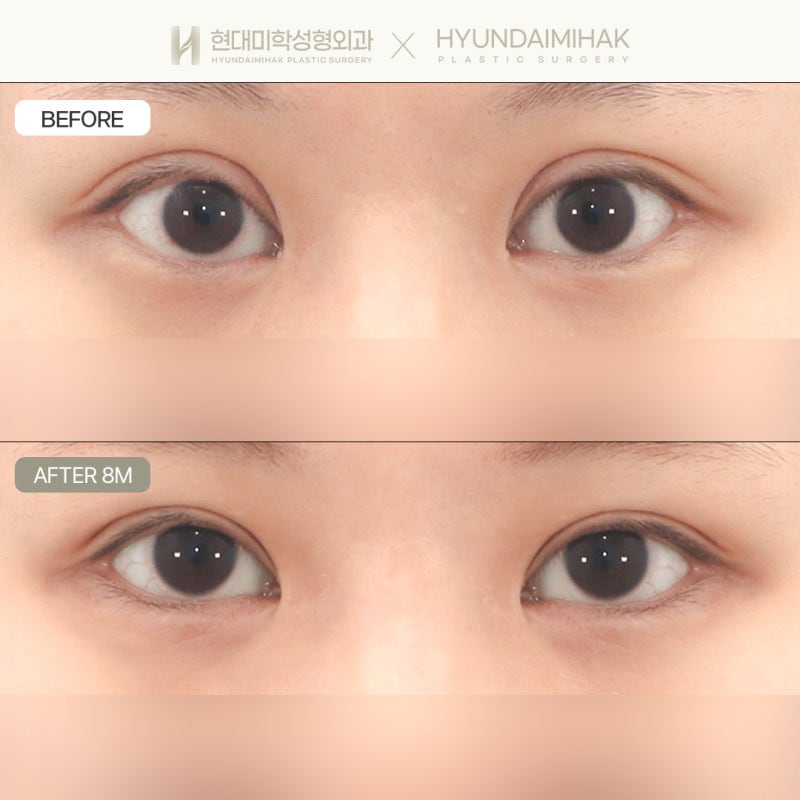
When looking up before-and-after cases of lowering the crease line, the terms you likely see most often are excision and double-line correction. These refer to surgical methods for lowering the line, and the appropriate method can vary depending on how much excess skin is available. Double-line correction is a method that lowers the line by releasing the adhesion of the existing high crease through dissection and then forming a new, lower crease. Some people are hesitant because it may leave two scar lines. Understandably so, because the existing scar can become lighter only when the adhesion is thoroughly released, making this a highly difficult revision surgery in which the surgeon’s skill is very important.
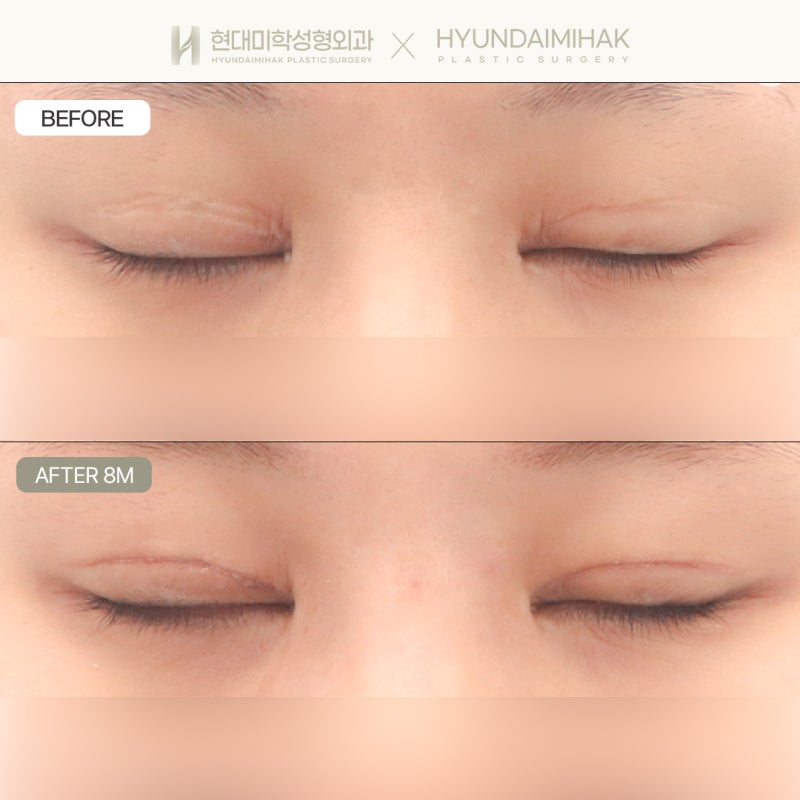
This double-line correction method is recommended for patients who do not have enough excess skin to allow clean excision. Therefore, it is suitable for those with limited skin laxity or for those who want to lower the crease height significantly. Another method, excision, removes the area between the existing line and the newly planned line, which can minimize the surgical scar, and some patients consider this an advantage. However, this method is suitable only for those with sufficient excess skin, and it is recommended for patients who want to lower the line only slightly, by about 1–2 mm, rather than lowering it substantially.
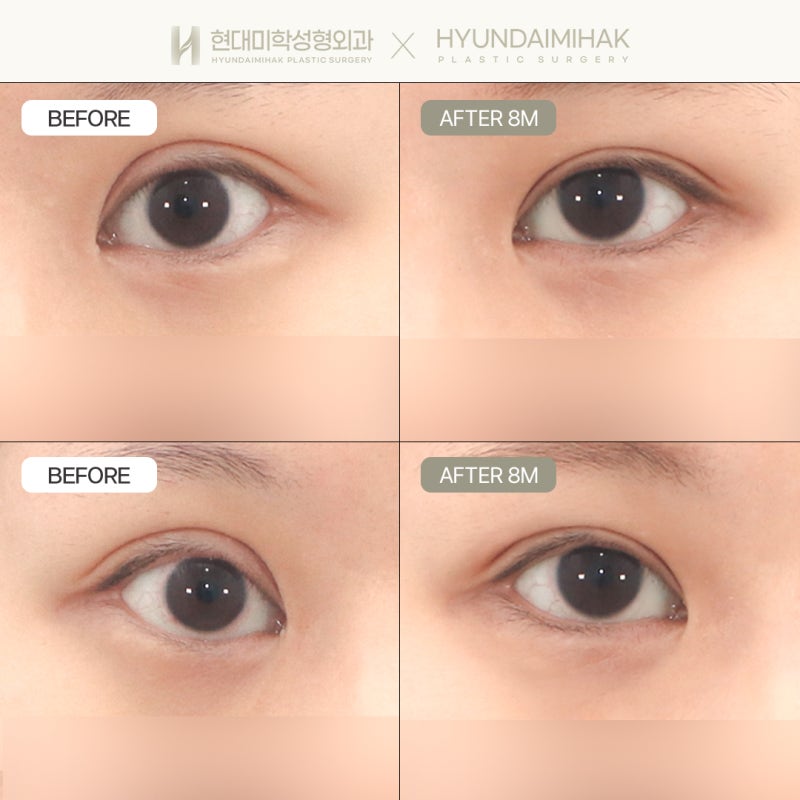
In the case of double-line correction, there can be concerns about postoperative scarring, while in the case of excision, because skin is removed, performing it in cases without enough excess skin may lead to lagophthalmos, so it is important to receive a thorough consultation. However, it is also possible to lower the line through non-incisional or incisional methods without excision or double-line correction. Please make sure to review enough before-and-after cases of lowering the crease line and then make a careful decision through consultations with several specialists. We hope your revision eyelid surgery will be successful, as shown in before-and-after cases of lowering the crease line. Thank you.