Various Approaches to Improving a Short Nose
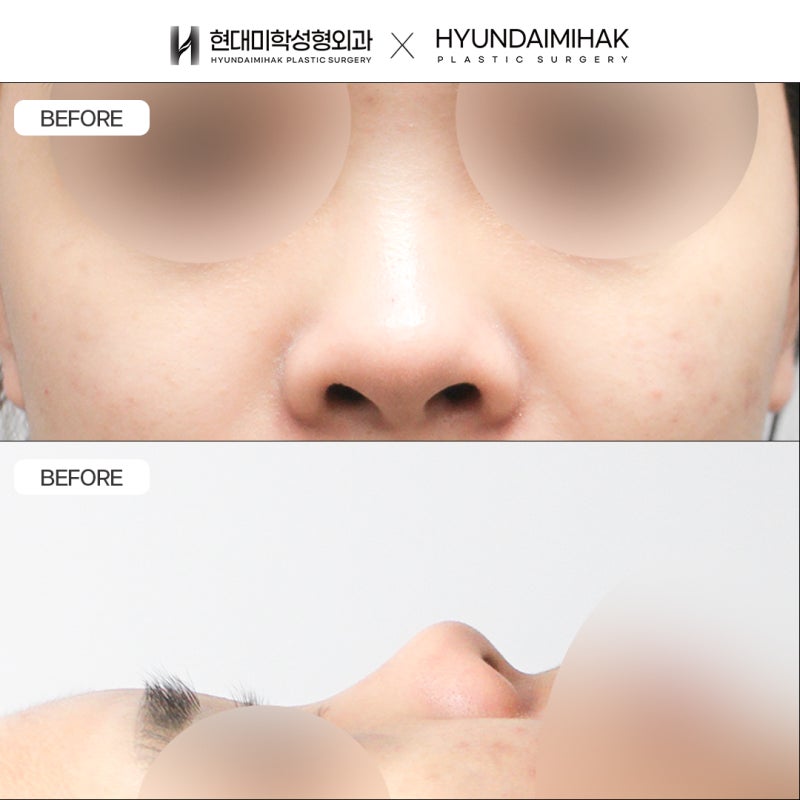
Hello, this is Hyundai Aesthetic Surgery. Many people consider the appearance of the nose, located at the center of the face, to be especially important. For this reason, we receive many inquiries about customized rhinoplasty that takes into account the height and length of the nose, as well as the shape and angle of the nasal tip. Among these, quite a few patients directly ask about short nose correction to improve the perceived length of the nose. A short nose can make the midface appear shorter and sometimes create a youthful look, but depending on the individual, it may also become a significant concern, making short nose correction necessary.
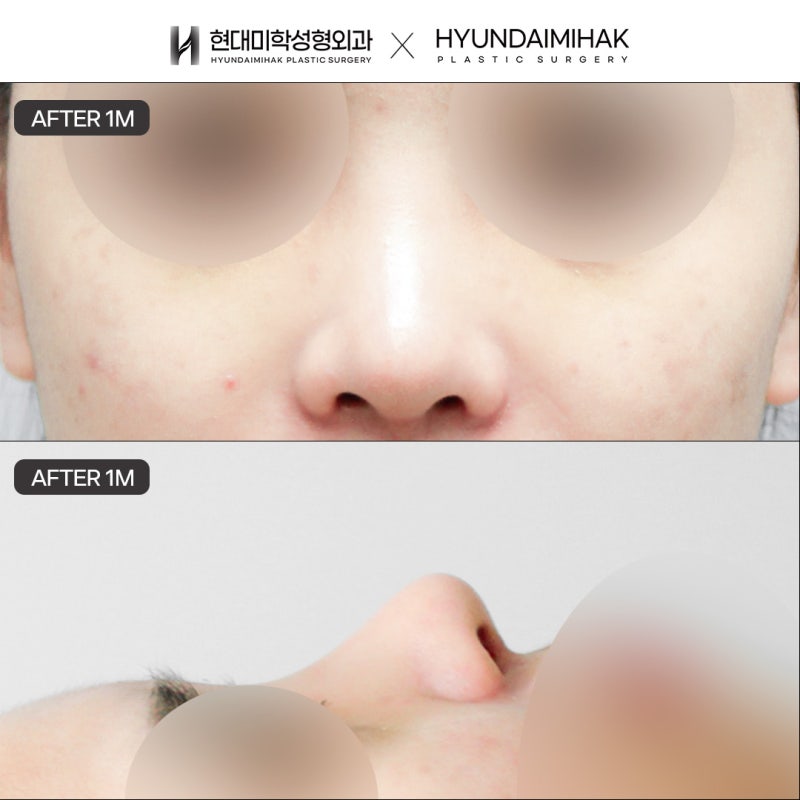
In particular, people with a short nasal length often also have complex issues involving the nasal bridge, nasal alae, and other areas. Among the patient cases I have personally encountered, there have been many different nose types in which the nasal bridge, nasal tip, and nasal alae were not in harmony, including upturned noses with a short nasal length and lifted tip, pig-like noses with a low bridge and wide alae, and typical bulbous noses. Let us look at information on short nose correction for addressing the nasal bridge, nasal tip, and alar width together.
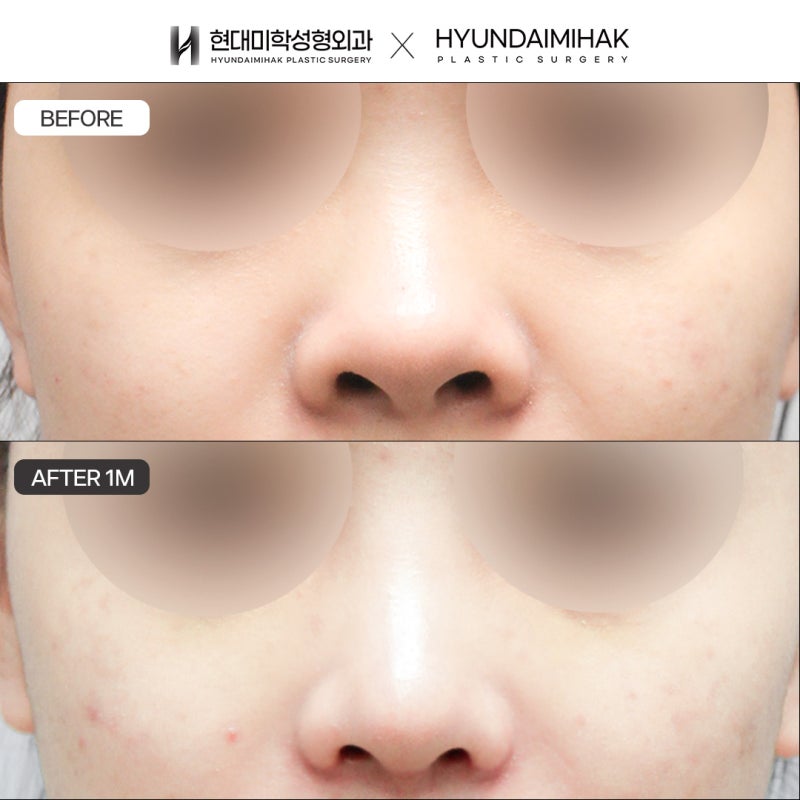
Basic rhinoplasty typically involves raising a low nasal bridge with silicone, a nasal bridge implant material, and when the nasal tip shape is the concern, selecting suitable autologous cartilage for each individual to correct it surgically. In the short nose correction case I have attached, when viewed in terms of facial proportions, the nasal length is short, making the alar width appear more pronounced and the nasal tip look upturned, which is consistent with an upturned nose case. To improve this, we performed nasal lengthening surgery, nostril-lowering surgery to reduce nostril show, and tip-lowering surgery.
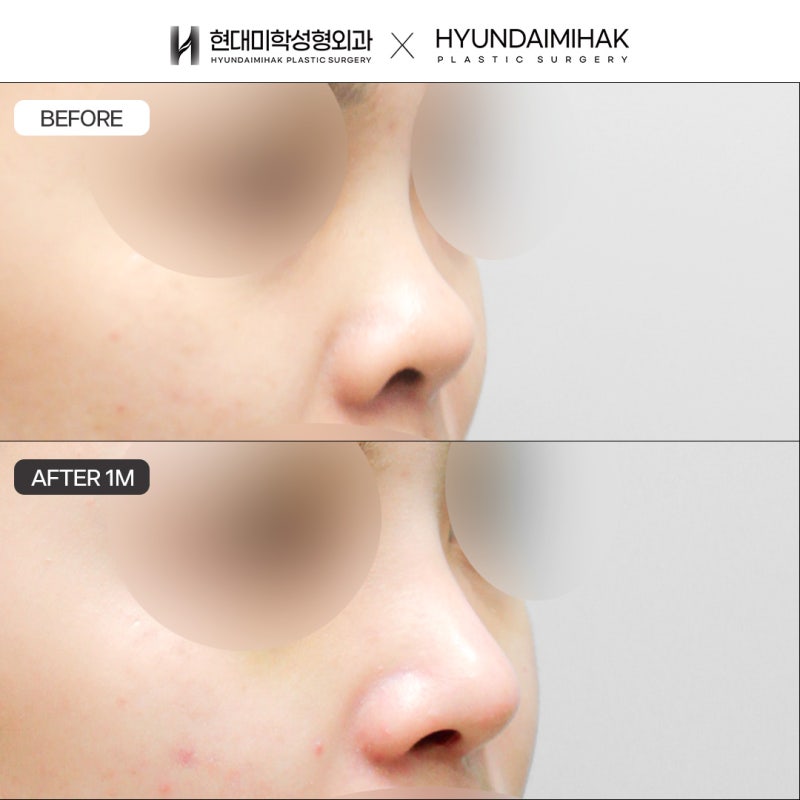
In the case above, to meet the patient’s request for natural-looking upturned nose correction, silicone was used for the nasal bridge and autologous rib cartilage was used for the nasal tip. In most such nose surgeries, customized silicone of a length suitable for the individual is used for the nasal bridge, while autologous cartilage such as ear cartilage, septal cartilage, or rib cartilage is used for the nasal tip.
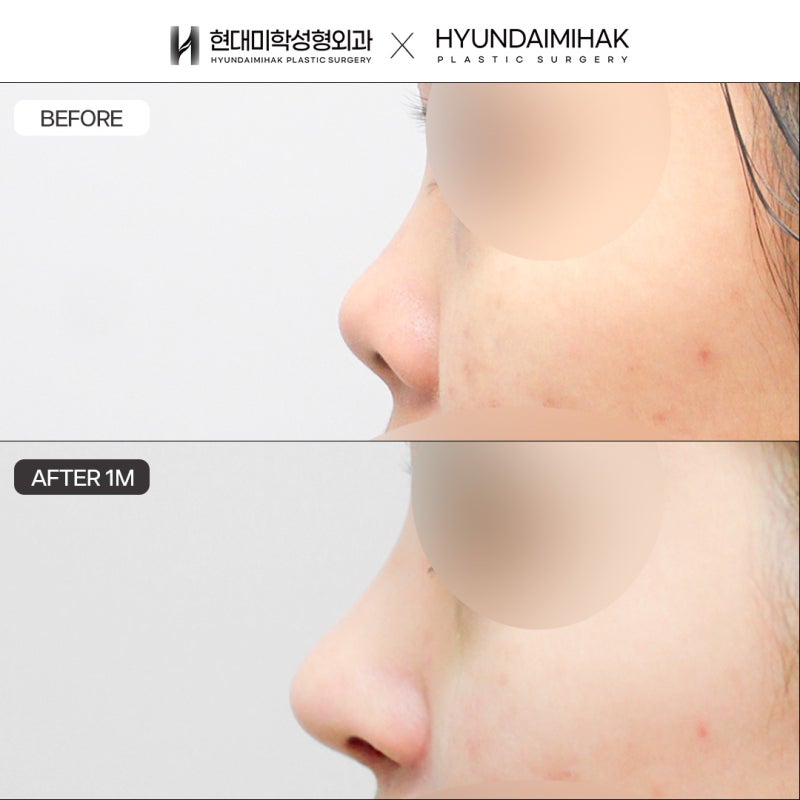
There are several surgical methods for improving a short nose. When the nasal length is short, as in the case above, autologous cartilage is used to create a support structure, extend the length of the nose, and firmly fix it in place through nasal tip extension surgery. On the other hand, when nostril show is severe or the nostrils are lifted, alar lowering or nostril-lowering surgery is performed directly, and when the nasal tip is lifted like an upturned nose, short nose correction can be achieved effectively through tip-lowering surgery.
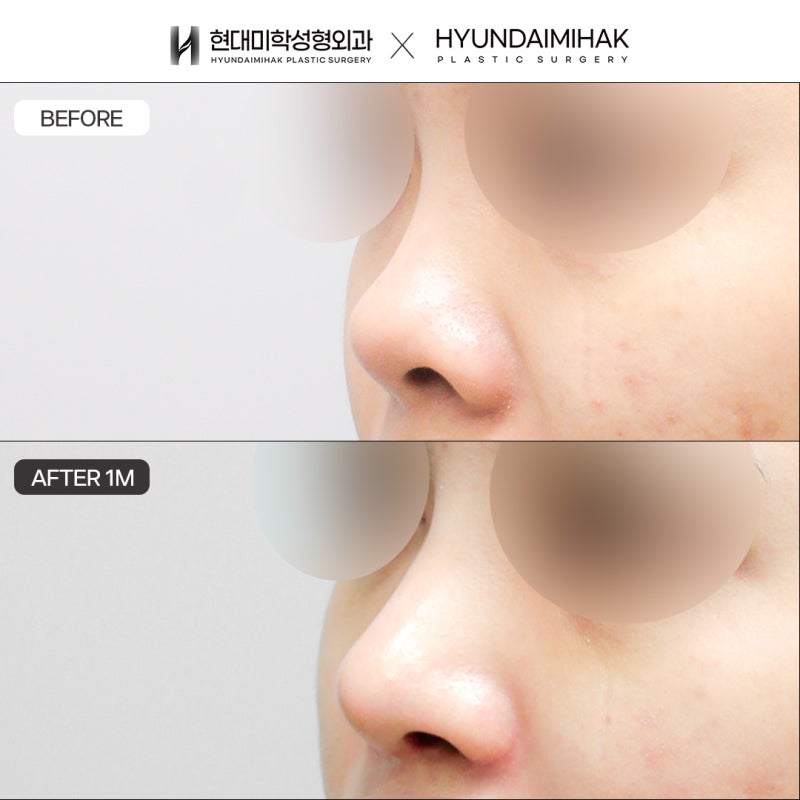
Each method should be performed after diagnosis according to the individual’s condition. Since the nose is a more complex and delicate surgical area than it may seem, it is important to proceed after a precise assessment of the nasal condition. To understand the type and characteristics of the nose, 3D-CT imaging to examine the internal nasal tissues is also recommended, and it is best to entrust the procedure to a reliable specialist. Thank you.