



Pinched Nose Revision Surgery: How Should It Be Performed?
Hello, this is Hyundai Aesthetic Surgery. Recently, as the weather has become colder and roads have iced over after rain, this is a time when accidents caused by slipping are a concern. We hope everyone takes care to stay safe. You may have made plans for the new year, but an unexpected injury can be upsetting. Today, we will discuss pinched nose revision surgery, a procedure that requires particular caution among cosmetic surgeries. Many people consider and decide on cosmetic surgery to improve their appearance. Rhinoplasty, in particular, is an important area because the nose is at the center of the face, and even a small change can create a significant difference. There are many reasons people decide to undergo cosmetic surgery, but these days, as appearance is increasingly regarded as part of one’s personal profile, more people are considering it. However, without sufficient consultation before surgery, unexpected results may occur afterward.
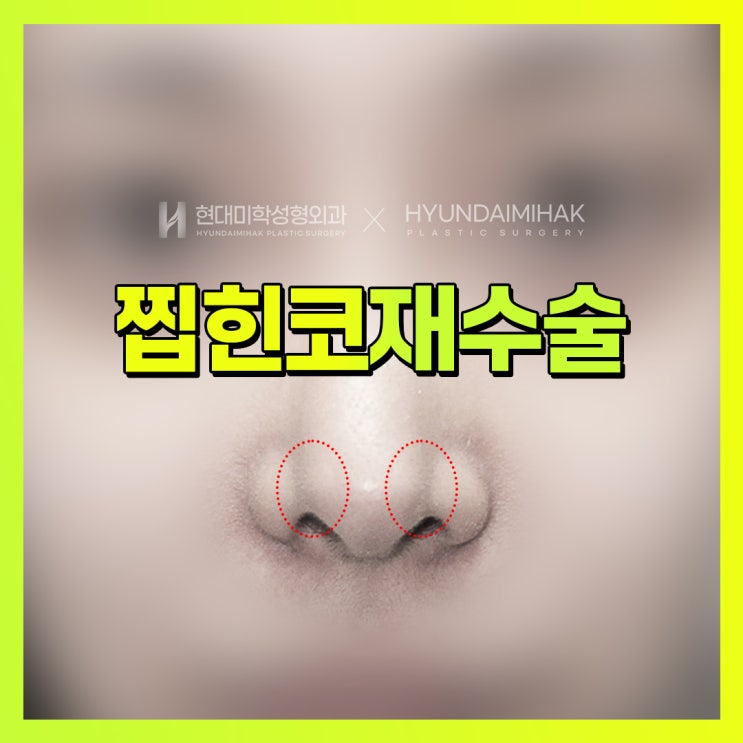
The case we will cover today is pinched nose revision surgery. A pinched nose refers to a problem that occurs when the cartilage of the nasal tip or alar area is tied irregularly during surgery, or when an implant is inserted improperly. This can appear as a sharply pointed nasal tip or a sunken shape, giving the nose an artificial and sharp impression. In such cases, it is important to resolve the issue by sufficiently stretching the skin. The key is to even out the depressed areas through dissection and improve excessively tied cartilage or unstable fixation, creating a natural and softer nasal shape. To address the problem of a pinched nose through revision surgery, correction should be performed promptly to prevent the condition from worsening.
When we look at the patient’s appearance after revision surgery, we can see that the nasal tip has become much rounder and has changed to a softer look compared with before. Previously, the cartilage was slightly visible, creating a sharp and pointed appearance, but after correction, the impression became much more natural and gentle. This change suggests that excessive fixation of the nasal tip cartilage was the issue. In many cases, the problem is cartilage that was tied too tightly during the first surgery, and an implant that does not fit the nasal structure may also be a cause. In such cases, proper material selection and a careful surgical plan are necessary.
After pinched nose revision surgery, the patient’s nasal tip became naturally rounded, and the position of the nostrils moved lower, creating a more harmonious appearance. This once again emphasizes that during the first surgery, it is important to set an appropriate height rather than excessively increasing the height of the nose, while considering overall balance. Because an overly high nose can disrupt facial harmony, it is important to determine the optimal height that suits each person’s face.
Therefore, if you are considering pinched nose revision surgery, the most important first step is to accurately identify what problems occurred during the initial surgery. The issue can be resolved by releasing cartilage that has been tied too tightly, or by reinforcing unstable fixation when needed. In addition, careful consideration should be given to the choice of implant material, and using autologous tissue may also be a good alternative.
Through surgery, we were able to naturally correct the previous sharp and artificial appearance. In this way, when the first surgery has not gone well, the results can be improved through appropriate revision surgery, and better outcomes can be achieved through careful consultation and accurate planning. When deciding on cosmetic surgery, it is most important to receive sufficient consultation and choose the optimal surgical method that is right for you. Even if the first surgery did not go well, please remember that improvement is possible through revision surgery, and choose change with confidence. At Hyundai Aesthetic Surgery, we will always do our best to achieve satisfying results for our patients. Thank you.